Skip to content
GardenPrimer

Best Compost Bins & Tumblers

Tumblers, static bins, and worm bins — compared on honest speed, capacity per square foot, and keeping rodents out.

Composters are sold on speed claims that real backyards rarely match, so we compare them honestly: how much material each style actually processes, how well it resists rodents, how much patio or yard footprint it demands, and whether the design makes turning and harvesting finished compost a chore or a habit.

5 models scored · Research checked November 17, 2026

Compost Bins & Tumblers

The quick answer

The dual-chamber VIVOSUN 43-gallon tumbler is the best fit for most suburban yards — one side cooks while the other fills, and the sealed drum keeps rodents out. If you have space and patience, the Geobin makes far more compost per dollar; if you want the fastest usable output indoors or out, worms in an Urban Worm Bag beat both.

New to this? Composters belong to Level 4 of the Primer Path — Feed & Defend. Learn the skill first, then buy once.

Read the level →

Our picks, in recommended order

The order is our editorial call on overall fit — price, size, setup and the drawbacks you'll live with. The PrimerScore summarizes public owner-rating signals, so the two can disagree. Filter by what matters to you.

We may earn a commission from qualifying Amazon purchases, at no extra cost to you. How affiliate links work.

Showing all 5 picks

Pick 1
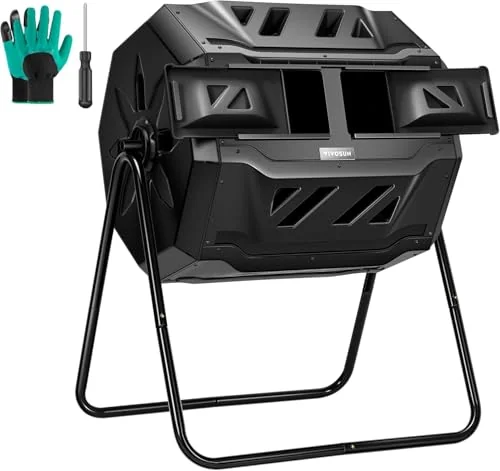
Tumbling Composter, 43 Gallon Dual Chamber

The value tumbler: same dual-chamber, rodent-resistant formula as pricier drums with a bit more capacity, at a noticeably lower price.

Picked for: Best value · Rodent resistant

✓ Dual chambers at a lower price✕ Thinner panels than premium tumblers
Our research on the VIVOSUN Tumbling Composter, 43 Gallon Dual Chamber

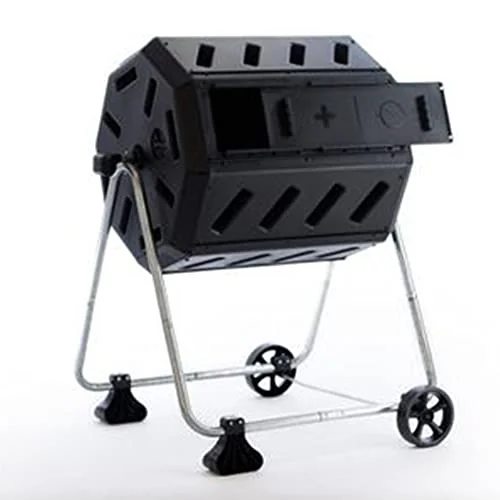
The value tumbler. VIVOSUN sells this as a 43-gallon twin-chamber drum, so one side can finish while you keep filling the other, at a lower price than the FCMP tumbler with slightly more listed capacity. VIVOSUN lists galvanized steel and PP plastic construction, adjustable air vents and deep internal fins to break up clumps as it turns, and backs it with 2-year after-sale service. It also ships with garden gloves and digging claws. The trade-off is assembly: there are many bolts, and a tumbler this size still holds far less than the open Geobin or Redmon bins.

Best for
Yard owners who want a two-batch tumbler that is easy to turn without paying for a premium drum.
Skip it if
You produce lots of leaves and clippings; the Geobin or Redmon 65-gallon bin holds more for less.
  • Dual chambers at a lower price
  • Slightly larger capacity than the FCMP
  • Aerated internal bar helps mixing
  • Thinner panels than premium tumblers
  • Fiddly assembly with many bolts
Capacity43 gal total, dual chamber
StyleRotating tumbler
MaterialPP panels, steel frame
FootprintAbout 3 ft x 2 ft
Warranty2-year after-sale service
IncludedGloves and 4 digging claws
VentilationAdjustable vents, internal fins

Sources

Research checked Nov 17, 2026. We research picks; we don't test them.
Pick 2
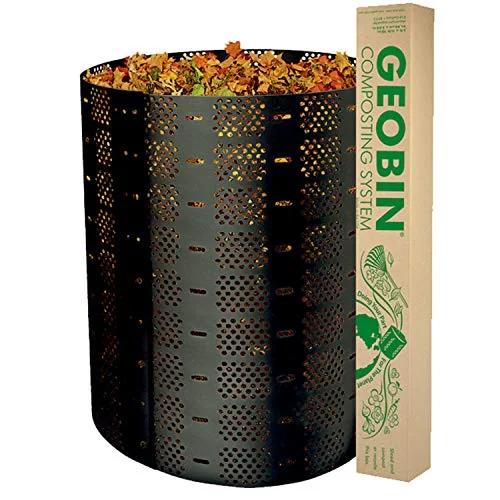
Geobin Compost Bin

An expandable plastic hoop that holds 70 to 246 gallons — by far the most compost volume per dollar, and big enough to actually heat up.

Picked for: Best value · High volume

✓ Huge capacity for the price✕ Open design offers no rodent protection
Our research on the Geobin Geobin Compost Bin

The most volume per dollar here. The Geobin is a single sheet of ventilated high-density polyethylene that you roll into a ring; the spec sheet lists a diameter adjustable from 24 to 44 inches, a 36-inch height and a volume from 70 to 246 gallons. A pile that large can hold heat, which speeds breakdown, and at 7 lb it packs flat when not in use. The trade-offs: it is open-topped and open-bottomed, so it offers no rodent protection, and turning means forking the pile rather than spinning a drum.

Best for
Gardeners with lots of leaves and clippings who want maximum capacity for the lowest cost.
Skip it if
Rodents or a tidy look matter to you; the lidded Redmon bin or a sealed tumbler like the VIVOSUN suits better.
  • Huge capacity for the price
  • Volume large enough to hold real heat
  • Sets up in minutes, packs flat off-season
  • Open design offers no rodent protection
  • Turning requires a fork and some effort
CapacityExpandable, 70–246 gal
StyleOpen static bin
MaterialVentilated high-density polyethylene
DiameterAdjustable, 24–44 in
Dimensions24–44 in dia. × 36 in tall
Weight7 lb

Sources

Research checked Nov 17, 2026. We research picks; we don't test them.
Pick 3
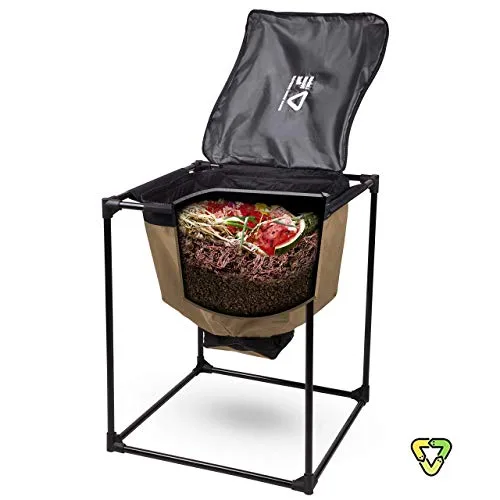
Worm Bag Version 2 Worm Composter

A continuous-flow fabric worm bin: feed scraps in the top and pull finished castings out of the bottom, with no trays to rotate and no worms to sort.

Picked for: Patios & small yards · Rodent resistant

✓ Continuous-flow design means harvesting never disturbs the worms✕ Worms sold separately
Our research on the Urban Worm Company Worm Bag Version 2 Worm Composter

The only worm bin on the list, and the pick for apartments, garages and porches. Urban Worm Company builds it from 900D oxford fabric with a water-resistant but breathable liner, on an iron frame, and rates the stitching for 120+ pounds of vermicompost. It uses a continuous-flow design: you feed the top and release a zipper-free bottom to harvest finished castings, which the company says can often be used as-is without screening. It comes with a lifetime warranty on materials and workmanship. The trade-offs are the price, worms sold separately, and fabric sides suited to sheltered spots.

Best for
Apartment or small-yard composters who want to turn food scraps into worm castings indoors or on a covered porch.
Skip it if
You mainly compost yard waste; the Geobin or Redmon bin handles leaves and clippings at a fraction of the cost.
  • Continuous-flow design means harvesting never disturbs the worms
  • Breathable 900D fabric helps keep the bin from going soggy
  • Sets up in minutes with no tools
  • Worms sold separately
  • Fabric sides make it an indoor, garage or sheltered-porch bin, not an open-yard one
StyleContinuous-flow fabric worm bin
HarvestRemovable bottom, no zipper
Material900D oxford fabric on a frame
PlacementIndoor, garage or sheltered outdoor
WarrantyLifetime, materials and workmanship
Dimensions27 × 27 × 30 in assembled
IncludedIron frame

Sources

Research checked Nov 17, 2026. We research picks; we don't test them.

Pick 4
65 Gallon Compost Bin

A simple lidded static bin with four access doors — more capacity than any tumbler here, with a lid that deters casual pests better than an open hoop.

Picked for: Best value · High volume

✓ 65-gallon capacity at a bargain price✕ Open bottom — determined rodents can dig in
Our research on the Redmon 65 Gallon Compost Bin

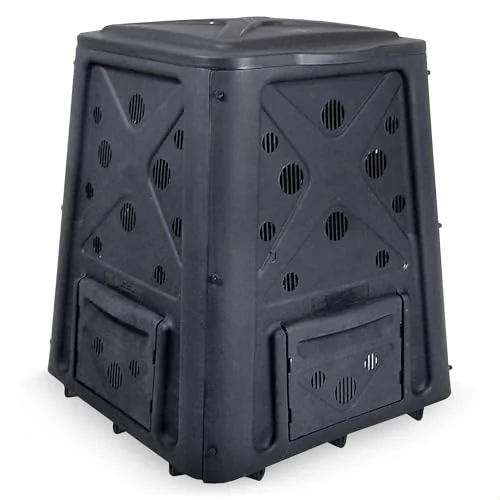
The simple lidded bin. At 65 gallons it holds more than either tumbler here, and it adds what the open Geobin lacks: a snap-on lid and four access doors, one on each side, so you can load from the top and shovel finished compost out of the bottom. The retailer listing describes multiple vent holes, plastic made with 80 percent post-consumer recycled material, tool-free assembly and a 1-year limited warranty. The trade-offs: the bottom is open to the ground, so determined rodents can dig in, and turning the pile is still manual work.

Best for
Beginners who want a covered, low-maintenance bin with plenty of capacity and no moving parts.
Skip it if
You want easier turning; a tumbler such as the VIVOSUN mixes the pile with a spin.
  • 65-gallon capacity at a bargain price
  • Lid and doors make loading and harvesting easy
  • No moving parts to break
  • Open bottom — determined rodents can dig in
  • Turning the pile is still manual work
Capacity65 gal
StyleLidded static bin
Access4 side doors plus top lid
MaterialUV-resistant polyethylene
Warranty1-year limited
Dimensions26 × 26 × 30.75 in

Sources

Research checked Nov 17, 2026. We research picks; we don't test them.

Pick 5
IM4000 Dual Chamber Tumbling Composter

The default backyard tumbler: two 18.5-gallon chambers let one side finish while the other fills, and the sealed, elevated drum keeps rodents out.

Picked for: Rodent resistant · Patios & small yards

✓ Dual chambers keep a continuous cycle going✕ Slower than the marketing suggests
PrimerScore 55Unavailable
Currently unavailable
Full review →
Our research on the FCMP Outdoor IM4000 Dual Chamber Tumbling Composter

The established two-chamber tumbler. FCMP lists about 37 gallons (5 cu ft) across both chambers, so one side can finish while you fill the other, with a body of 100% post-consumer recycled, UV-inhibited, BPA-free polypropylene on a galvanized steel frame. Deep fins act as hand holds and break up clumps, and the maker suggests 5–6 turns every 2–3 days, saying compost can finish in as little as two weeks in hot, sunny conditions with the right mix. The trade-offs: less capacity than the VIVOSUN for more money, and that two-week figure is a best case.

Best for
Small-yard owners who want an enclosed, off-the-ground tumbler made from recycled plastic.
Skip it if
Price per gallon matters most; the VIVOSUN tumbler lists more capacity for less.
  • Dual chambers keep a continuous cycle going
  • Sealed and elevated — rodent resistant
  • Easy to turn compared with forking a pile
  • Slower than the marketing suggests
  • Assembly takes an hour or more
Capacity37 gal total, dual chamber
StyleRotating tumbler
MaterialBPA-free recycled polypropylene
FootprintAbout 3 ft x 2 ft
Dimensions28 × 30 × 36 in assembled

Sources

Research checked Nov 17, 2026. We research picks; we don't test them.

Comparison of every composters pick
Pick
VIVOSUN Tumbling Composter, 43 Gallon Dual Chamber#1
Mid-rangeVIVOSUN Tumbling Composter, 43 Gallon Dual Chamber
Geobin Geobin Compost Bin#2
BudgetGeobin Geobin Compost Bin
Urban Worm Company Worm Bag Version 2 Worm Composter#3
PremiumUrban Worm Company Worm Bag Version 2 Worm Composter
No owner rating yet
Redmon 65 Gallon Compost Bin#4
BudgetRedmon 65 Gallon Compost Bin
FCMP Outdoor IM4000 Dual Chamber Tumbling Composter#5
Mid-rangeFCMP Outdoor IM4000 Dual Chamber Tumbling Composter
Price & buy

$79.99

Check price on Amazon

$35.99

Check price on Amazon

$139

Check price on Amazon

$69.99

Check price on Amazon

Unavailable

Currently unavailable

Prices checked Oct 8, 2026 and change often. Specs are as the manufacturers state them. We may earn a commission from qualifying Amazon purchases.

How to choose composters

Tumbler, static bin, or worm bin — the honest tradeoffs

Tumblers are tidy and rodent-resistant, but the two-week finished-compost claims on the box assume ideal conditions most households never hit — expect a few months. Static bins hold far more for less money but need occasional fork-turning. Worm bins produce the richest amendment and work year-round in a garage.

Volume versus footprint

Compost breaks down fastest in volume — a pile around a cubic yard holds heat that a small drum cannot. If yard space allows, a large static bin outperforms a small tumbler. On a patio or in a rodent-prone neighborhood, a sealed tumbler or worm bin is the practical ceiling.

Feed it right: browns, greens, and moisture

Whatever the container, results come from the mix: roughly two to three parts dry browns like leaves and shredded cardboard to one part fresh greens like kitchen scraps, kept about as moist as a wrung-out sponge. Most beginner failures are too many greens — a wet, smelly bin — not the wrong hardware.

Common questions

Do compost tumblers really finish compost in two weeks?

Almost never in a real backyard. Those claims assume a perfectly balanced, fully loaded drum in warm weather. Small drums lose heat quickly, so most tumbler owners see usable compost in two to four months. Tumblers still earn their keep on convenience and rodent resistance, not speed.

Will a compost bin attract rats?

Open piles and cheap open-bottom bins can, especially if meat, dairy, or oily food goes in. A sealed tumbler off the ground or a lidded worm bin is the safest choice in a rodent-prone area — and keeping cooked food out of any composter matters more than the hardware.

What should I not put in my composter?

Skip meat, dairy, oily foods, and pet waste in any backyard system — they smell and draw pests. Diseased plants and weeds gone to seed are risky too, since home piles, especially tumblers, often never get hot enough to reliably kill seeds and pathogens.