How to Mulch Leaves With a Lawn Mower (and Skip the Rake)
5 min readUpdated Primer Path Level 4
Researched and written by the GardenPrimer editorial team · How we research
The quick answer
Remove the bagger, raise the mower deck to its highest setting, and make at least two passes over dry leaves until the pieces are about dime-size and sift into the grass. Mow every time roughly an inch of leaves has fallen. If you can still see grass through the chopped layer, the lawn can absorb it.
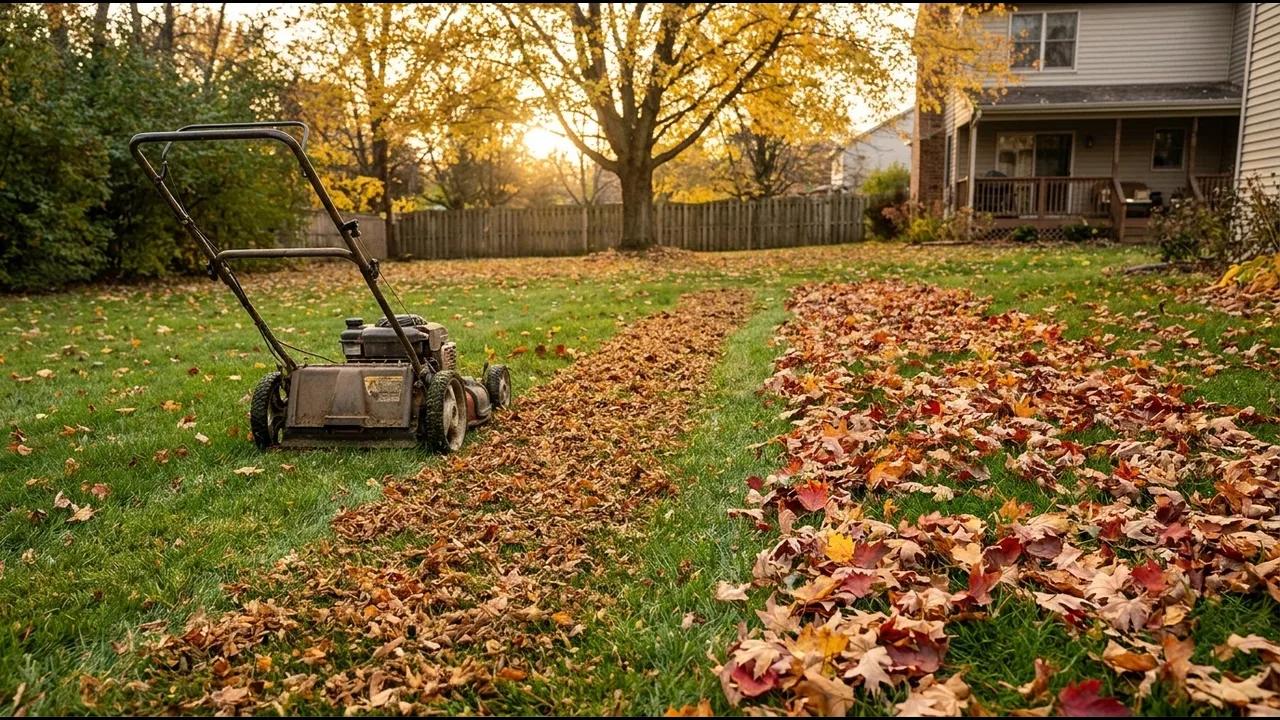
You can mulch fallen leaves straight into the lawn with the mower you already own. Take the bagger off, raise the deck to its highest setting, and make at least two passes over dry leaves until the pieces sift down between the grass blades. If you can still see grass through the layer, it is not too thick. No raking, no bags, and the lawn gets fed.
That is the method in Colorado State University Extension's GardenNotes on using leaves. Below: how many leaves a lawn can take, mower settings, and where the surplus goes.
The method in five steps
- Wait for dry leaves. Wet, matted leaves will not lift into the deck, even with a new blade, according to University of Georgia turf guidance on mower mulching.
- Remove the bagger and set the deck as high as it goes.
- Mow so the discharge throws leaves toward the middle of the lawn. Each lap shrinks the pile into a windrow.
- Keep running over the windrow until most pieces are about dime-size or smaller, the target UGA gives.
- Spread the fine pieces back out with a final pass, then let rain and soil life finish the job.
Match the method to the leaf load
Frequency matters more than mower power. K-State Research and Extension's Johnson County mulch-mowing guide recommends mowing each time about an inch of leaves covers the turf, not waiting for the whole fall to land.
| What is on your lawn | What to do | Source |
|---|---|---|
| Grass still visible through the leaves | Mulch-mow in place, at least two passes, bagger off | CSU Extension |
| About an inch of fresh leaves | Mow now; repeat each time another inch falls | K-State Extension |
| More than the lawn can absorb | First pass bagger off to chop, second pass bagger on to collect | K-State Extension |
| Wet, matted leaves | Wait for them to dry; the deck cannot lift them | UGA Extension |
| Oak or cottonwood leaves | Chop them well; they are high in tannins and slow to break down | CSU Extension |
K-State reports that frequent passes can work six inches or more of leaves into a lawn over a season without damage: a running total across many mows, not a six-inch blanket at once.
💡 The see-grass test is the only measurement you need. If chopped leaves hide the turf completely, bag some of them on the next pass and move them somewhere else.
Set up the mower
No special machine needed. UGA says mulching blades chop finer and speed decomposition, but a regular blade in good shape works.
- Highest deck setting, so leaves circulate and get cut more than once.
- Bagger off for the chopping pass. K-State notes that mowing with the bag on sucks whole leaves into the bag without shredding them.
- Check the blade's fan tips. The curved ends create the lift that pulls leaves up into the blade, and UGA says they are usually the first part to wear out. A worn tip still cuts grass but mulches leaves poorly.
Shopping anyway? Check discharge modes. What the listings say for four mowers in our guides:
| Mower | Leaf-relevant modes | Note |
|---|---|---|
| EGO Power+ LM2135SP kit | Mulch, bag | Swappable mulching and bagging blades included |
| Greenworks 40V 21" self-propelled | Mulch, bag, side discharge, leaf pickup | 5.0Ah battery and charger in the box |
| PowerSmart 22-inch 170cc | Mulch, bag, rear discharge | Gas, self-propelled |
| PowerSmart EasyCut 18-inch | Side discharge only | No mulch mode, but side discharge can still build a windrow |
More picks are in our cordless mower and gas mower guides; normal-season settings are in the mowing height guide.
What the research found
University trials found mulch-mowing helps the lawn:
- Fewer weeds. CSU's GardenNotes cites a Michigan State University study in which mulching leaves into lawns reduced dandelions and crabgrass after three years. The fine pieces cover bare soil where weed seeds would otherwise germinate.
- No harm at high rates. CSU also cites Purdue University research finding that heavy rates of mulched leaves did not change turf quality, color or soil pH.
- No thatch. Per CSU, mulched leaves do not cause thatch to build up.
- Less fertilizer over time. Leaves add soil organic matter, and CSU explains that its nutrients become available to the grass over time.
All of this assumes shredded leaves. CSU stresses that leaves should be mulched, not left whole on the lawn, and K-State says to stop once chopped pieces start piling up on top of the turf and shading the grass.
Feed the lawn while you are at it
K-State points out that cool-season lawns such as bluegrass and tall fescue are normally fertilized between September and November, and that the nitrogen also helps soil organisms break down the leaf pieces. A dedicated product like Scotts Turf Builder WinterGuard Fall Lawn Food fits that window; the full comparison is in our lawn fertilizer guide. Follow the label rate.
Where the extra leaves go
Big trees can drop more than a lawn can absorb. The surplus is a resource, not trash.
| Destination | How much | Tip from the source |
|---|---|---|
| Vegetable or annual bed | A 6- to 8-inch layer of chopped leaves each fall | Moisten it and let microbes work over winter (CSU) |
| Around tender or new plants | 3 to 6 inches of shredded leaves inside a wire cage | Remove the cage and leaves as spring growth begins (CSU) |
| Compost bin | Whole leaves work better than shredded ones here | Chopped leaves pack down and starve the pile of air (CSU) |
| Trees, shrubs and borders | Twice-mown leaves spread as mulch | They conserve moisture and hold back weeds (K-State) |
For the compost route, CSU's guide to mowing, composting and mulching leaves suggests a bin at least three feet on each side, leaves balanced with green material like grass clippings and kitchen scraps, and, if you lack greens, a quarter to half a cup of fertilizer per 10 to 15 pounds of leaves (one without weed killer). The Geobin, an open bin that holds 70 to 246 gallons depending on how wide you set it, per its maker, suits a leaf pile; other styles are in our composter guide, and the browns-and-greens basics are in composting for beginners. The mulch guide covers depth and timing for beds.
⚠️ Never rake or blow leaves into the street. K-State warns they clog storm drains and wash into ponds and streams, where the nutrients they release feed algae blooms.
Leave one corner alone
Leave some whole leaves in a quiet bed edge or under shrubs: CSU notes that undisturbed leaf litter gives native bumblebees a place to spend the winter. Everywhere else, a leaf blower can move leaves off beds and paths onto the lawn, and the mower does the rest.
Common questions
Is it better to mulch leaves or bag them?+
Mulch them when the lawn can absorb the layer. Colorado State University Extension notes that mulched leaves add organic matter and do not build thatch. Bag only the surplus once chopped pieces would hide the grass, and use those leaves in beds or compost.
Can I mulch leaves without a mulching mower?+
Yes. University of Georgia Extension says a regular blade works if it is sharp and its curved fan tips are not worn, because those tips create the lift that pulls leaves into the blade. A mulching blade simply chops finer and speeds decomposition.
How many leaves are too many to mulch into the lawn?+
If you cannot see grass through the chopped layer, it is too thick. Mowing each time about an inch falls keeps it manageable, and K-State Extension reports that six inches or more can be worked in across a season that way.
Should I mulch wet leaves?+
No. Wet leaves mat down and the mower cannot lift them into the deck, even with a new blade. Wait for a dry afternoon and mow then.
The gear in this guide, scored
- 76PrimerScore
Cordless Electric Mowers
Top pick: Ego Power+ LM2135SP 21 in. Select Cut Self-Propelled Mower Kit · $749
- 84PrimerScore
Leaf Blowers
Top pick: EGO LB5302 530 CFM Blower Kit (2.5Ah battery + charger) · $199.99
- 83PrimerScore
Compost Bins & Tumblers
Top pick: VIVOSUN Tumbling Composter, 43 Gallon Dual Chamber · $79.99