Your First Bed
One raised bed, five crops, one honest season
A single raised bed is the best classroom in gardening: small enough to weed in ten minutes, big enough to feed you tomatoes in August. Level 2 is one season, one four-by-four bed, five easy crops, and the discovery that soil — not seeds, not gadgets — is what you're actually cultivating.
You're at this level if…
- You kept containers alive and want real quantities of food
- You have a patch of yard or patio that gets six-plus hours of sun
- You're willing to commit to one growing season, spring to fall
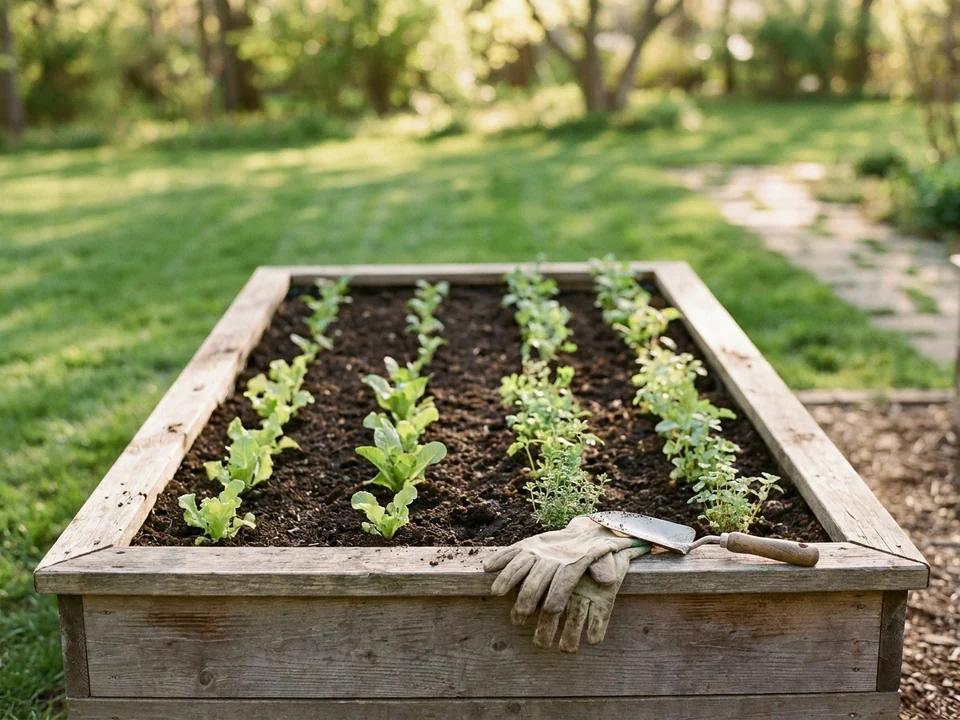
Your next task
Pick the sunniest spot, then measure it
Watch one patch of yard across a day. The bed needs six or more hours of direct sun and a hose that reaches it. Measure the space before you shop for a bed or soil.
Your progress
3 milestones finish this level. Tick them off as you go.
See the milestones ↓Saved on this device only. No account.
What this level teaches
5 short lessons, in order. Each ends with one thing to try.
Why a raised bed and not a dug plot
A raised bed lets you skip your yard's compacted, rocky or mystery soil and start with a known mix on day one. It drains in wet springs, warms earlier, and draws a clean line between garden and lawn that makes weeding psychological instead of endless. Dug beds are cheaper; you can graduate to them later.
Try it now: Walk your yard today and note where the ground stays soggy, mossy or puddled and where it drains and dries first. Mark the driest patch that also gets sun. That is where the bed goes.
The fill is the real cost
A 4x8 bed seventeen inches deep swallows well over a cubic yard of soil, and bagged product at that volume can cost more than the bed. Price the fill before you pick the bed: bulk soil delivery beats bags past a few hundred quarts, and a cheaper, shallower bed with money left for good compost beats a tall showpiece filled with junk.
Try it now: Measure the bed size you are considering, multiply length by width by depth in feet, and write the cubic feet down. Then price that same volume in bags and in bulk delivery locally. Choose the bed after you see both numbers.
Five crops that forgive
Plant zucchini, bush beans, cherry tomatoes, lettuce and a marigold border the first year. They germinate reliably, shrug off beginner watering, and produce enough to feel like winning. Resist the seed catalog's siren voice — variety is a Level 4 pleasure, and ten crops in one new bed is how everything underperforms at once.
Try it now: Write your first-year crop list on paper today and stop at five. Zucchini, bush beans, cherry tomatoes, lettuce and marigolds is a complete answer. Every other tempting crop goes on a separate list titled next year.
Read the frost calendar, not the weather app
Your region has an average last-spring-frost and first-fall-frost date, and the stretch between them is your season. Tomatoes go out two weeks after the last-frost date, no matter how warm one April Saturday feels. Most first-year losses are impatience dressed up as optimism.
Try it now: Look up your average last-spring and first-fall frost dates today and write both on your kitchen calendar. Then mark the tomato date two weeks after the last-frost line, and trust that mark over any warm April Saturday.
Feed the soil once, mulch it always
Mix compost into the top few inches at planting, plus a balanced organic fertilizer if you're growing heavy feeders, then cover the bare soil with two inches of straw or shredded-leaf mulch. Mulch halves your watering, blocks most weeds, and quietly becomes next year's soil. Bare dirt in July is a part-time job you didn't apply for.
Try it now: Water two bare patches of ground in the same sun. Cover one with two inches of dry leaves, dry grass clippings or shredded newspaper and leave the other bare. By evening, feel which patch stays damper.
The mistakes everyone makes here
Going too big in year one
Three beds and a sprawling in-ground plot is a June fantasy that becomes an August guilt trip. One bed, tended well, teaches more than four tended badly — and next spring the expansion is a known cost instead of a gamble.
Cheap soil in an expensive bed
The bed is furniture; the soil is the engine. Backfilling a beautiful steel bed with dollar-a-bag fill dirt gets you stunted plants and a season-long mystery. Spend the savings on compost — it's the one input that pays back every year after.
What Level 2 needs
Level 2 is the first real purchase: the bed itself, enough good soil to fill it, and a hose or can that reaches the bed without a fight. Fertilizer helps heavy feeders but is optional. Buy the bed for soil depth and material honesty, not looks — and remember the fill costs as much as the box.
What you need
5 thingsA raised bed
Depth matters more than looks. Around a foot of soil suits most first-year vegetables.
Scored picks: Raised Beds →Enough soil to fill it
The fill often costs as much as the bed. Work out the volume with the soil calculator before buying either.
A hose or watering can that reaches the bed
If watering means a long walk, it will not happen in July.
Scored picks: Hoses & Timers →Five forgiving crops
Zucchini, bush beans, cherry tomatoes, lettuce and marigolds, as transplants or seed packets.
Mulch
Straw or shredded leaves to cover bare soil and hold moisture.
Already have something that does the job? Use it — none of this needs to be new.
Optional shortcuts
Not needed to finish this level. Paid extras that can make a step easier, each with a trade-off.
An organic fertilizer
Mixed in at planting, it gives heavy feeders like tomatoes and zucchini a steadier season.
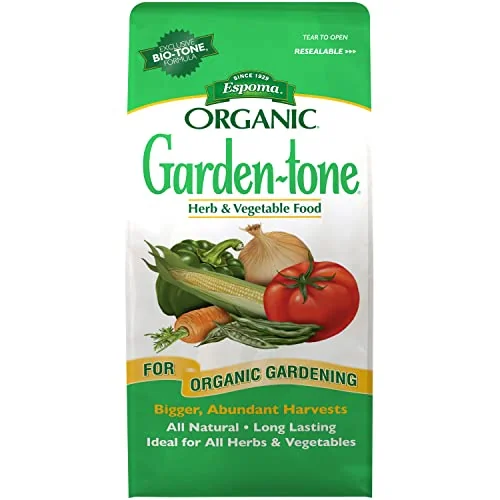
Top-scored FertilizersGarden-tone Organic Herb & Vegetable Food 3-4-4, 4 lb84Check price
Scored picks for what you need
Our top-ranked listing in each gear category on the list above — ranked from research, not hands-on testing. An ordinary version you already own works too.
$222.92 is the listed prices of the scored picks — excludes soil, plants and anything you already own.
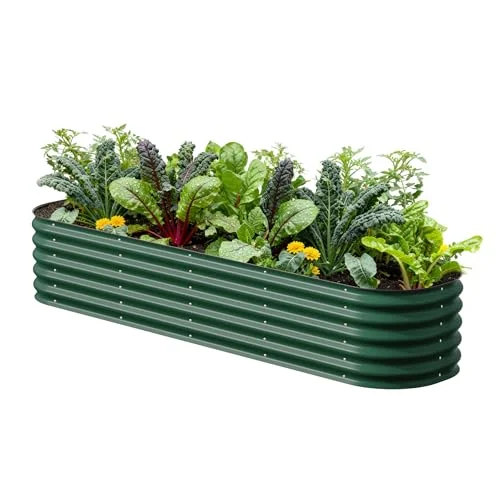
The modern default raised bed: 17 inches of root depth for carrots and potatoes, nine bolt-together configurations, and coated galvanized steel that outlasts untreated cedar.
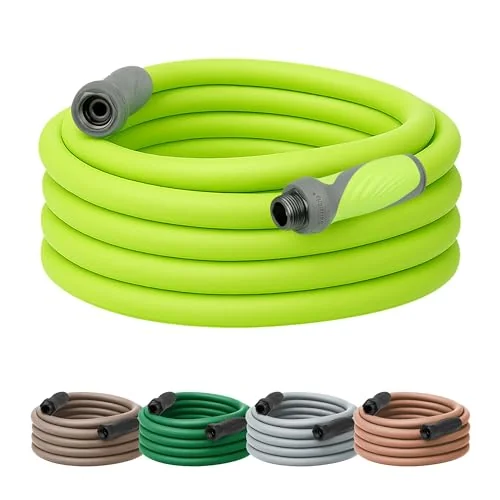
The hybrid polymer hose that made kink-free real — light, flexible in the cold, all-metal fittings, and it lies flat instead of fighting you back onto the reel.
Every scored pick for this level: Raised Garden Beds · Organic Fertilizers & Soil Amendments · Garden Hoses & Timers
Guides for this level
Mulch 101: What to Use, When to Apply, and How Deep
A beginner's guide to mulch: which material to choose, the 2-to-3 inch rule, the best time to apply it, and the volcano mistake that hurts plants.
5 min read
What to Fill a Raised Bed With: The 60/30/10 Soil Mix
The simple raised bed soil mix that works, how to fill tall beds cheaply, bagged vs bulk, what never to use, and how to top off in year two.
5 min read
How to Start a Vegetable Garden: A Beginner's Guide
A beginner's guide to starting a vegetable garden: sun mapping, choosing a bed, five forgiving crops, soil and feeding, and realistic first-year results.
5 min read
Raised Bed vs In-Ground Gardening: Which to Choose
Raised bed vs in-ground, compared honestly: real cost including the soil-fill trap, soil control, drainage, ergonomics, and when digging in-ground wins.
5 min read
When to Plant Tomatoes: A Frost-Date Guide That Works
Skip the calendar. Time tomatoes by your last frost date and soil temperature, with region bands, a seed-starting countdown and a hardening off checklist.
5 min read
What's next
By September you'll know the real bottleneck wasn't planting — it was watering consistency through July. Level 3 fixes that with irrigation that runs without you.