How to Start a Vegetable Garden: A Beginner's Guide
5 min readPublished Primer Path Level 2
Researched and written by the GardenPrimer editorial team · How we research
The quick answer
Start by finding a spot with six to eight hours of direct sun, then commit to one small bed you can actually keep up with. Fill it with good soil plus compost, plant five forgiving crops, water deeply two or three times a week, and expect one crop to fail.
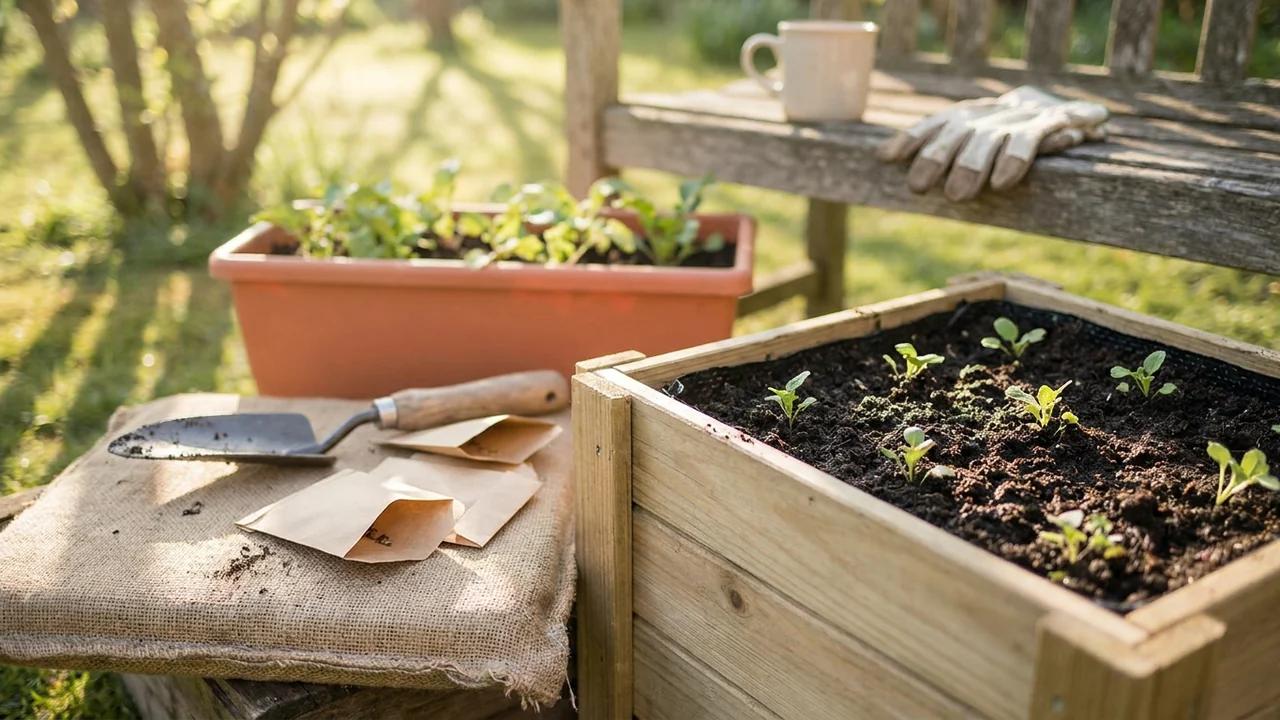
A first vegetable garden succeeds or fails mostly on decisions you make before a single seed goes in: where the sun actually falls, how much space you can realistically keep up with, and what is going on in the soil underneath. Get those three right and a handful of forgiving crops will carry you through the season. Get them wrong and no amount of fussing in July will save the tomatoes. Here is the whole sequence, in the order you need it.
Start with sun, not seeds
Nothing here matters more than light. Fruiting crops — tomatoes, peppers, squash, cucumbers, beans — want six to eight hours of direct summer sun. Leafy crops and most herbs get by on noticeably less.
Spend one clear day mapping your yard before you buy anything:
- Note which parts of the yard are in full sun at 8 a.m., noon, and 4 p.m.
- Repeat the check once in early summer, when the trees have leafed out and the shade line moves.
- Watch for afternoon shade from the house or a fence, which costs you the hottest, most productive hours.
- Pick the sunniest spot that is also close to a water spigot. You will visit it daily.
If your best spot gets four hours or less, do not force a tomato bed into it. Grow lettuce, chard, and herbs there instead, or start with containers you can move to chase the light — that is exactly what Level 1: First Pot is built around.
Choose a growing space you can finish
Beginners almost always plant too much. One 4-by-8-foot raised bed, or two if you are ambitious, is a full season's worth of learning.
- Raised bed — you supply the soil, so you skip whatever is wrong with your native ground. Warms earlier in spring, drains well, easy to reach across. Browse the scored options in raised garden beds.
- In-ground row — cheapest by far and holds water longer in summer heat, but you inherit your existing soil and its compaction.
- Containers — lowest commitment, highest watering frequency.
If you are torn, the honest tradeoffs are laid out in raised bed vs in-ground gardening.
Your first season at a glance
| Stage | Timing | What you do | Common beginner mistake |
|---|---|---|---|
| Plan | 8–10 weeks before last frost | Pick the spot, size the bed, list 5 crops | Choosing 15 crops |
| Start seeds | 6–8 weeks before last frost | Sow tomatoes and peppers indoors under lights | Starting far too early |
| Prep soil | 2–4 weeks before last frost | Fill or amend, rake level, water it in | Planting into dry, dusty mix |
| Plant cool crops | Once soil is workable | Direct-sow lettuce, radish, peas | Waiting for warm weather |
| Plant warm crops | 1–2 weeks after last frost | Transplant tomatoes, sow beans and squash | Setting out tender plants too soon |
| Maintain | All summer | Water deeply, feed monthly, pull weeds young | Watering a little every day |
| Harvest | Midsummer onward | Pick often, especially zucchini and beans | Letting fruit oversize on the plant |
The five most forgiving crops
Plant these first. They germinate readily, tolerate imperfect timing, and give you feedback fast enough to learn from.
| Crop | Start from | When to plant | Why it forgives beginners |
|---|---|---|---|
| Bush beans | Direct seed | After last frost, warm soil | Fast germination, no trellis, no fuss |
| Zucchini | Direct seed | After last frost | One or two plants feed a household |
| Leaf lettuce | Direct seed | As soon as soil is workable | Cut-and-come-again, harvest in weeks |
| Radish | Direct seed | Early spring and again in fall | Ready in about a month, great for kids |
| Cherry tomato | Transplant | 1–2 weeks after last frost | Sets fruit far more reliably than big slicers |
Tomatoes are the crop most often planted too early; when to plant tomatoes walks through reading your frost date and soil temperature. If you are starting seeds indoors, know the common traps first — see seed starting mistakes and the gear in seed starting kits.
Soil first, fertilizer second
Fertilizer cannot fix bad soil structure. Aim for something dark, crumbly, and moist-but-not-soggy.
- New raised bed: fill with a bulk garden soil or topsoil blend, then mix a few inches of compost into the top layer.
- Existing ground: loosen the top 8–10 inches with a fork, spread 2–3 inches of compost, and work it in shallowly.
- Either way: mulch with straw or shredded leaves once plants are up. Mulch is the single cheapest way to cut watering.
Compost is worth making yourself once you are hooked — composting for beginners covers the basics, and the tumblers in composters shorten the timeline. For feeding, a granular organic blend worked in at planting plus one mid-season side-dressing covers most vegetables. If the three numbers on the bag baffle you, NPK numbers explained decodes them, and organic fertilizers has the scored picks. Follow the label rate — more is not better.
Water deeply, not often
New gardeners drown some plants and starve others in the same week. The pattern to build:
- Water in the morning, at the base of the plant, not over the leaves.
- Soak deeply two or three times a week rather than sprinkling daily.
- Check by finger: dig two inches down. Dry at that depth means water; damp means wait.
- Newly sown seed is the exception — keep the top half-inch consistently moist until it sprouts.
A cheap hose timer removes the most common cause of a failed first garden: a hot week and a busy schedule. Start with garden hoses and timers, and see how often to water a vegetable garden for the seasonal adjustments.
What a realistic first season looks like
Something will fail. Squash bugs, a late frost, a bolted lettuce patch — expect one or two disappointments and treat them as data rather than verdicts. Most beginners get a heavy zucchini and bean harvest, decent tomatoes, and one crop that simply did not work. That is a normal, successful year one.
Keep a two-line note each week: what you planted, what went wrong. Next spring it will be worth more than any guide.
Where this fits on the Primer Path
This guide is the on-ramp to Level 2: First Bed, where you size, site, and fill a real bed and take it through a full season. If you have not grown anything yet, Level 1: First Pot is a gentler start. The full curriculum, free and in order, lives at The Primer Path.
Common questions
How much sun does a vegetable garden really need?+
Fruiting crops like tomatoes, peppers, squash, and beans want six to eight hours of direct summer sun. Leafy greens and most herbs stay productive on four to six. If your only spot is shadier than that, grow greens rather than forcing fruiting crops.
How big should a first vegetable garden be?+
One 4-by-8-foot bed is plenty for a first season. It holds five or six crops, takes only a few minutes a day to tend, and is small enough that a bad week does not sink it. Expand next year once you know your actual routine.
Should I start from seeds or buy transplants?+
Buy transplants for tomatoes and peppers your first year, and direct-sow beans, squash, lettuce, and radish, which resent transplanting anyway. Indoor seed starting adds lights, heat mats, and timing decisions that are easier to learn in year two.
When can I plant after the last frost?+
Cool crops such as lettuce, peas, and radish go in as soon as the soil is workable, weeks before your last frost date. Warm crops such as tomatoes, beans, and squash wait until one to two weeks after it, when soil has actually warmed.