Composting for Beginners: Browns, Greens, and Bins
5 min readPublished Primer Path Level 4
Researched and written by the GardenPrimer editorial team · How we research
The quick answer
Composting means layering carbon-rich browns like dry leaves and cardboard with nitrogen-rich greens like vegetable scraps, roughly two or three parts browns to one part greens, keeping the pile damp and aerated. Skip meat, dairy, and pet waste. It is finished when it is dark, crumbly, and no longer heating up.
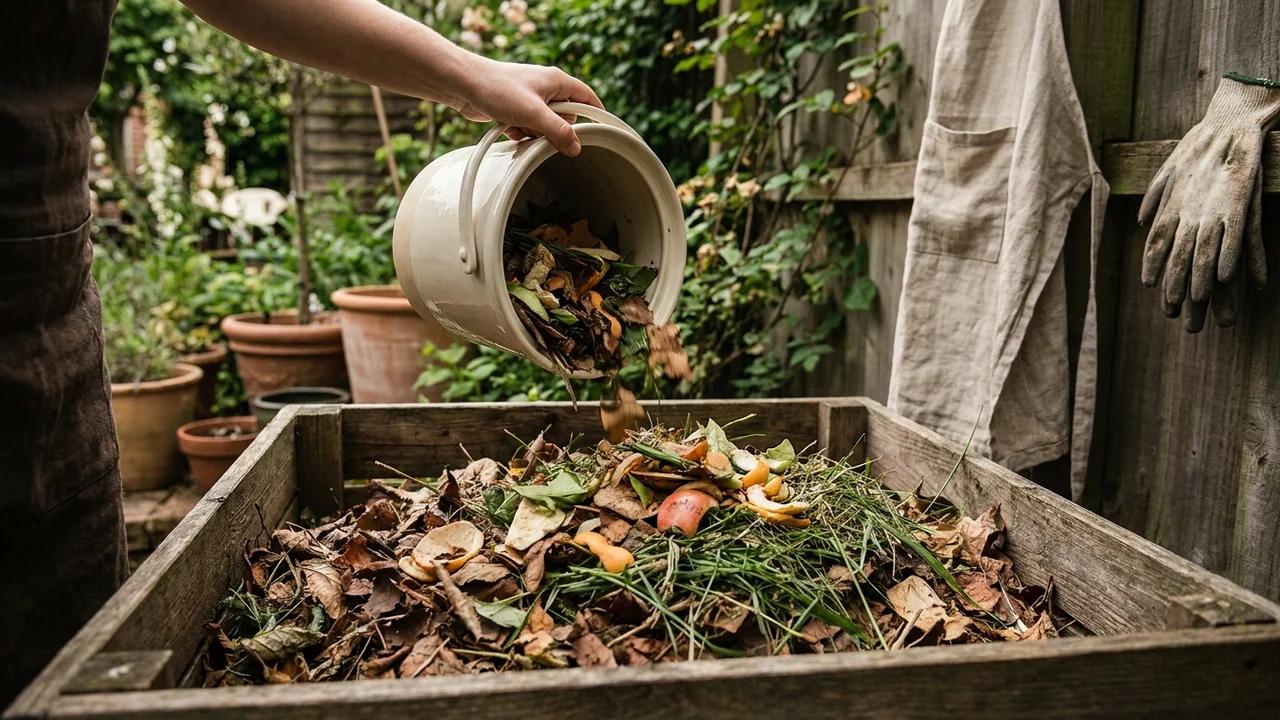
Compost is the cheapest soil improvement in gardening. You feed a pile the things you were already throwing away, wait a while, and get a dark crumbly material that helps sandy soil hold water and helps heavy clay drain. The hard part is not the biology, which handles itself. The hard part is knowing what goes in, what never does, and what to do when the pile either smells awful or sits there doing absolutely nothing.
Browns and greens, in plain English
Every composting guide talks about browns and greens. Those words describe carbon and nitrogen, not color, which is why coffee grounds count as a green even though they are obviously brown.
| Category | What it actually means | Common examples | Rough share of the pile |
|---|---|---|---|
| Browns | Carbon-rich, dry, bulky, slow to break down | Fall leaves, shredded cardboard, straw, paper bags, wood chips, untreated sawdust | Two to three parts by volume |
| Greens | Nitrogen-rich, wet, dense, fast to break down | Vegetable and fruit scraps, coffee grounds and filters, grass clippings, spent plants | One part by volume |
You do not need a scale or a spreadsheet. The working rule is simple: every time you add a scoop of kitchen scraps, bury it under roughly two scoops of dry, shredded browns. If the pile ever looks wet and matted, you needed more browns.
Hoard leaves in autumn. A stash of bagged dry leaves parked next to the bin is the single biggest difference between a pile that works and a pile that stinks, because browns are the ingredient you always run short of in summer.
What never goes in a home pile
Home piles rarely get hot enough, or stay hot long enough, to handle everything a municipal facility can. Keep these out:
- Meat, fish, bones, grease, and oily leftovers, which attract rodents and turn sour
- Dairy in any form, for the same reason
- Dog and cat waste, and used cat litter, because of pathogens
- Weeds that have already gone to seed, and any perennial weed root like bindweed
- Plants you pulled because they were diseased, especially anything with blight
- Charcoal briquette ash, treated or painted wood, and glossy or plastic-coated paper
- Anything labeled compostable that specifies commercial facilities, which most cups and bags do
Everything else from the kitchen and the yard is fair game. If you are unsure, the EPA's home composting resource hub is a solid plain-language reference.
Tumbler, static bin, or worm bin?
These three are not interchangeable, and the honest differences matter more than the marketing does.
| Method | Best for | Speed | The honest downside |
|---|---|---|---|
| Tumbler, like the VIVOSUN dual-chamber drum | Small yards, rodent worries, people who want tidy | Fast when filled in one batch, slow if you add scraps continuously | A tumbler you keep topping up never finishes; you really need two chambers or a second bin |
| Static bin or open pile | Anyone with leaf volume and a corner to spare | Slow, several months to a year | Needs turning with a fork to speed up, and it looks like what it is |
| Worm bin | Apartments, patios, small kitchen volumes only | Steady, small output | Worms are livestock; they die if the bin overheats, dries out, or gets overfed |
Most beginners are best served by a static bin plus a leaf stash, and the tumbler crowd is happiest running two. Browse the scored options on our composters page if you are still choosing.
Air, water, and size
Three physical conditions do most of the work, and none of them require a thermometer.
- Moisture. A handful should feel like a wrung-out sponge. Bone dry stalls; soggy goes anaerobic.
- Air. Turn or tumble every week or two, or push a few sticks in vertically for passive airflow.
- Size. A pile under about a cubic yard struggles to hold heat, which is why tiny piles decompose slowly rather than not at all.
- Particle size. Chopped and shredded material finishes far faster than whole stalks and intact cardboard boxes.
Troubleshooting, by symptom
| What you notice | Likely cause | Fix |
|---|---|---|
| Rotten-egg or sour smell | Too wet, too many greens, no air | Add dry browns, turn it, cover if rain keeps soaking it |
| Ammonia smell | Nitrogen overload, often grass clippings | Bury the clippings in browns and stop adding greens for a week |
| Nothing is happening | Too dry, too small, or all browns | Water it, add a greens layer, consolidate into one bigger pile |
| Flies and gnats | Exposed food scraps | Always bury scraps under several inches of browns |
| Rodents visiting | Meat, dairy, or an open bin | Remove the offenders and switch to an enclosed bin or tumbler |
| Warm center, cold edges | Normal | Turn the outside material into the middle |
A cold pile is not a broken pile. It is a slow pile. If you are patient, doing nothing but layering and waiting still produces finished compost eventually.
Knowing when it is finished
Finished compost is dark, crumbly, and smells like a forest floor. You should not be able to identify what any of it used to be, other than the occasional stubborn twig or avocado pit that you can screen out and toss back in.
- The pile has stopped heating up after you turn it
- Volume has dropped by roughly half or more
- No recognizable food scraps remain
- The earthy smell is pleasant, not sour
Spread an inch or two on top of beds and let worms work it down, or mix it into containers at planting time. Compost is a soil conditioner first and a mild nutrient source second, so it pairs with rather than replaces a fertilizer. If the numbers on fertilizer bags still confuse you, start with NPK numbers explained, then look at the organic fertilizers that suit your crops. Bed gardeners in particular should read raised bed vs in-ground gardening before deciding how much compost they need to buy versus make.
Where this fits on the Primer Path
Composting lives in Feed and Defend, the level where you stop simply keeping plants alive and start building soil that does the work for you. If you have not planted yet, begin with how to start a vegetable garden and set the bin up alongside your first season rather than waiting. The full curriculum is at the Primer Path, and compost is one of the few gardening projects where starting late costs you nothing but time.
Common questions
How long does compost take?+
A turned, well-balanced pile with shredded material can finish in two to three months in warm weather. An unturned pile of leaves and scraps typically takes six months to a year. Cold weather pauses it rather than ruining it, so winter piles simply resume in spring.
Can I compost in winter?+
Yes. Decomposition slows dramatically or stops when the pile freezes, but nothing is lost. Keep adding scraps buried under browns through the cold months, and the pile will heat back up on its own once temperatures rise in spring.
Do I need a compost starter or activator?+
No. The microbes that do the work are already on the material you add and in the soil beneath the pile. If you want a boost, a few shovels of finished compost or garden soil mixed in does the same job for free.
Why does my tumbler never finish?+
Almost always because it is being topped up continuously. A tumbler works as a batch system: fill it, then stop adding and let it finish while a second bin or chamber collects new scraps. Continuous adding restarts the clock every time.