The Steady Garden
Irrigation, feeding rhythm, and a garden that survives your vacation
The difference between a garden that limps to August and one that produces until frost is not talent — it's consistency, and consistency is a systems problem. Level 3 replaces willpower with drip lines, timers and a feeding rhythm, so the garden thrives on the weeks you forget it exists.
You're at this level if…
- You've finished a season and watering was the thing that slipped
- A vacation or a hot week has cost you plants
- You're ready to expand beyond one bed without expanding the workload
Your next task
Check how deep your watering reaches
An hour after you water, dig beside a plant with your fingers and note how deep the soil is damp. That depth tells you whether your beds need longer, less frequent soaks.
Your progress
3 milestones finish this level. Tick them off as you go.
See the milestones ↓Saved on this device only. No account.
What this level teaches
4 short lessons, in order. Each ends with one thing to try.
Drip beats sprinkler for beds
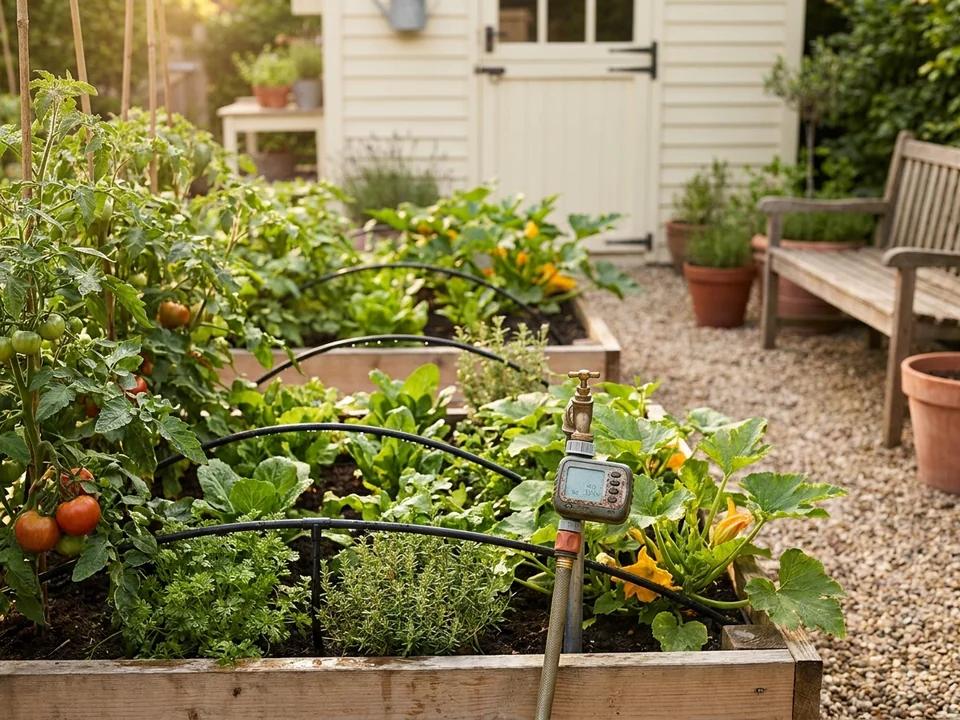
Overhead water wets leaves, feeds fungal disease, and evaporates before it reaches roots. Drip lines put water at the soil line, slowly, where it soaks deep and teaches roots to follow. A basic kit does one to three beds in an afternoon, and the fittings are more forgiving than they look.
Try it now: Water a bed the way you normally do, wait an hour, then dig a small hole beside a plant with your fingers. Write down how deep the moisture actually reached. That depth is the case for drip, in your own soil.
A timer is the whole level
The honest upgrade of Level 3 is not more garden — it's the garden no longer depending on your morning mood. A hose timer on a drip line, set to early morning every second day and adjusted monthly with the season, outperforms every well-intentioned human with a watering can.
Try it now: Write down honestly what time you watered each day this past week, and mark the days you skipped entirely. That skipped-day count is what a timer buys you, and it is the number to compare against a month from now.
Deep and rare beats shallow and daily
Daily sprinkles create shallow roots that panic in the first heat wave. Long, infrequent soaks push roots down where the moisture holds. Poke a finger two knuckles into the soil an hour after a cycle ends — damp at depth means the schedule is right, regardless of what the surface looks like.
Try it now: An hour after your next watering, push a finger two knuckles into the soil beside a plant. Damp at that depth means the soak was long enough. Dry means lengthen the next cycle, not add more cycles, then check again.
Feeding is a rhythm, not a rescue
Heavy feeders like tomatoes and squash run through the planting-day fertilizer by midsummer. A light side-dressing of granular organic feed every four to six weeks, or a liquid fish-and-kelp drench every two, keeps production steady. Feeding a wilted, struggling plant is triage; the rhythm is what prevents the triage.
Try it now: Put four dates on your calendar right now, spaced five weeks apart across the season, each one labelled to side-dress the heavy feeders. Deciding the rhythm in advance is what stops you feeding a plant only once it wilts.
The mistakes everyone makes here
Set-and-forget forever
A June schedule drowning the garden in cool September is the classic timer failure. Irrigation is set-and-adjust-monthly, not set-and-forget — the timer removes the daily chore, and you keep the monthly judgment.
Skipping the filter and pressure regulator
Drip emitters clog on sediment and blow off at full house pressure, and both failures are invisible until plants brown. The cheap inline filter and regulator that come with good kits are not optional packaging — they're the difference between a system and a science fair.
What Level 3 needs
This is the most gear-forward level, and the best money-per-result in all of gardening: a drip kit, a reliable timer, and a season's fertilizer together cost less than one dead season's plants. Buy the timer for reliability reviews, not features — a basic dial that always fires beats a flaky app.
What you need
4 thingsA hose timer
A basic model that fires reliably beats a feature-rich one that doesn't.
Scored picks: Hoses & Timers →Drip line or soaker hose for each bed
Puts water at the roots instead of on leaves and paths.
Scored picks: Drip Irrigation →A season's worth of fertilizer
Enough for a feeding every few weeks through the main growing months.
Scored picks: Fertilizers →Four feeding dates on a calendar
Decide the rhythm in advance so you are not feeding a plant only once it wilts.
Already have something that does the job? Use it — none of this needs to be new.
Scored picks for what you need
Our top-ranked listing in each gear category on the list above — ranked from research, not hands-on testing. An ordinary version you already own works too.
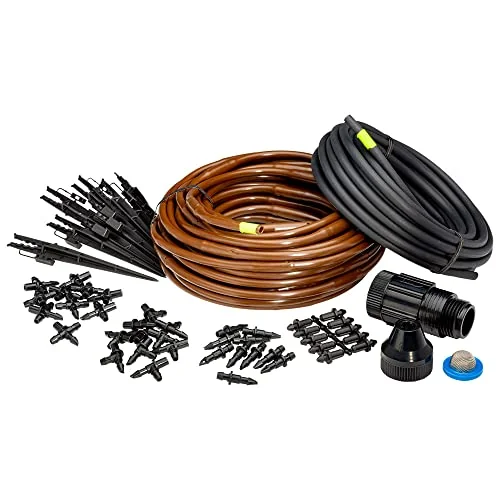
A real irrigation brand's starter kit: 1/4 inch tubing with 70 inline pressure-compensating emitters, plus a filter washer and pressure regulator, sized for raised beds up to 4 × 8 ft.
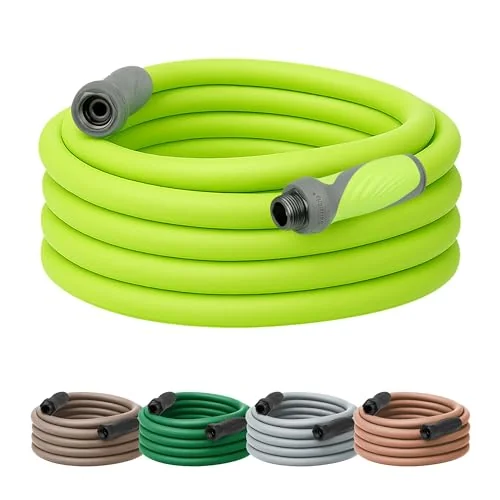
The hybrid polymer hose that made kink-free real — light, flexible in the cold, all-metal fittings, and it lies flat instead of fighting you back onto the reel.
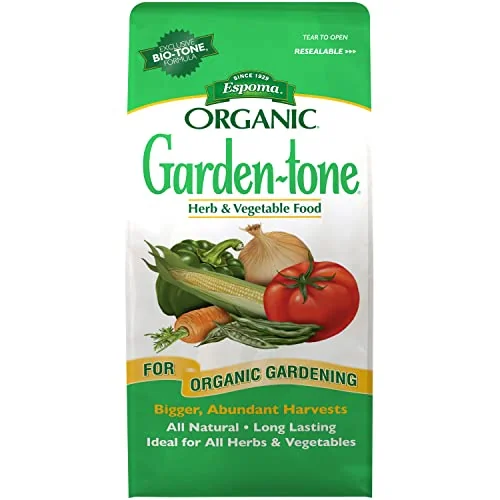
The default granular feed for vegetable beds — a gentle 3-4-4 blend with added beneficial microbes and decades of track record, applied monthly through the season.
Every scored pick for this level: Drip Irrigation Kits · Garden Hoses & Timers · Organic Fertilizers & Soil Amendments
Guides for this level
Tomato Blossom End Rot: Why Eggshells Won't Fix It
Blossom end rot is a calcium delivery problem caused by uneven watering, not low soil calcium. What the black bottoms mean and what really fixes them.
5 min read
How Often to Water a Vegetable Garden: A Simple Guide
How often to water a vegetable garden, by container, raised bed, weather and growth stage, plus the finger test and signs of over and underwatering.
5 min read
Drip Irrigation for Raised Beds: A Beginner's Setup
Set up drip irrigation in a raised bed: what is in a kit, 1/4 vs 1/2 inch tubing, a 4x8 layout step by step, timer schedules and simple maintenance.
5 min read
What NPK Numbers Mean and How to Read a Fertilizer Bag
NPK explained for beginners: what nitrogen, phosphorus, and potassium do, how to read a guaranteed analysis, match numbers to crops, and compare real cost.
5 min read
What's next
A steady, well-fed garden is also a banquet for pests — and a factory for clippings and scraps. Level 4 closes both loops: defending the garden and feeding it from its own waste.