What NPK Numbers Mean and How to Read a Fertilizer Bag
5 min readPublished Primer Path Level 3
Researched and written by the GardenPrimer editorial team · How we research
The quick answer
The three numbers on a fertilizer bag are the percentages by weight of nitrogen, phosphorus, and potassium. Nitrogen drives leafy growth, phosphorus supports roots and fruiting, and potassium handles stress tolerance. The ratio matters more than the size of the numbers, and a bigger set simply means a more concentrated product.
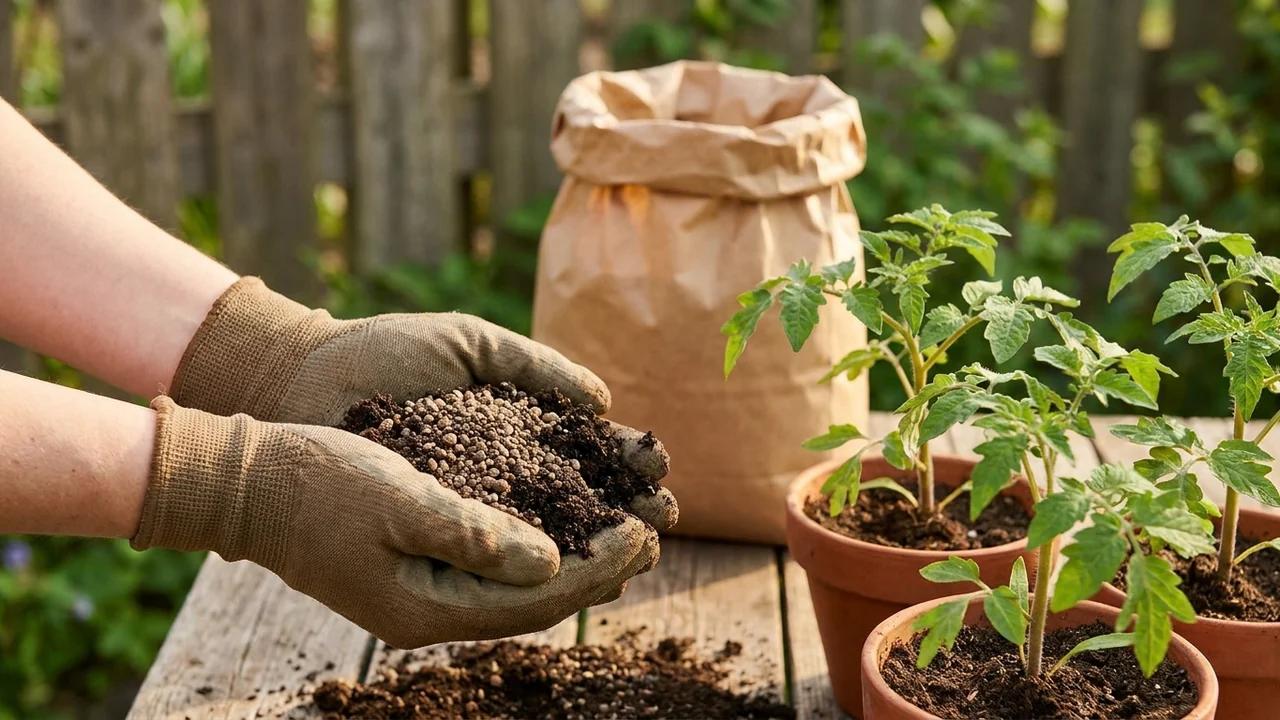
Fertilizer bags all shout three numbers at you, and almost nothing on the front of the bag explains what they mean or whether the product is right for what you are growing. The numbers are not a quality score, and a bigger set is not a better product. Once you can read the label, a wall of nearly identical bags collapses into three or four genuinely different choices.
What the three numbers actually mean
N-P-K is nitrogen, phosphorus, and potassium, expressed as a percentage by weight of the bag's contents. A 5-3-3 bag is five percent nitrogen, three percent phosphorus, three percent potassium, and the rest is carrier material and micronutrients.
| Letter | Nutrient | What it does | What deficiency tends to look like |
|---|---|---|---|
| N | Nitrogen | Leaves and green growth | Older, lower leaves yellowing while the plant stays small |
| P | Phosphorus | Roots, flowering, fruit set | Stunted, slow growth, sometimes purple-tinged stems |
| K | Potassium | Water regulation, stress and disease tolerance | Scorched, browning leaf edges on older leaves |
- The ratio matters more than the size of the numbers
- A 10-10-10 is simply twice as concentrated as a 5-5-5, not twice as good
- The remaining percentage is not filler in a dismissive sense; it is what makes the product spreadable and safe
Reading a real label
Turn the bag around. The front is marketing; the guaranteed analysis on the back is regulated.
- Guaranteed analysis. The three numbers plus any listed micronutrients like calcium, magnesium, or sulfur.
- Derived from. This is the most informative line on the bag. Feather meal, bone meal, and kelp behave nothing like urea and muriate of potash.
- Net weight. You need it to work out cost per application.
- Application rate. Usually pounds per hundred square feet, or a scoop count per plant.
- Directions and cautions. Follow the label; it is the legal and practical authority on rates, timing, and safety.
If a bag lists a rate per hundred square feet and you garden in two 4x8 beds, you have 64 square feet. Do the division before you open the bag, not after you have already spread it.
Matching numbers to what you grow
There is no universal best fertilizer, but there are sensible defaults.
| What you are growing | Lean toward | Why | Example product type |
|---|---|---|---|
| Lettuce, spinach, kale, herbs | Higher first number | You are harvesting leaves, so nitrogen is the point | A balanced-to-high-N blend |
| Tomatoes, peppers, squash | Moderate N, steady P and K | Too much nitrogen gives you a beautiful leafy plant and little fruit | A tomato-labeled blend like Espoma Garden-tone |
| Carrots, beets, onions | Lower N, adequate P and K | Excess nitrogen pushes tops at the expense of roots | An all-purpose blend at a reduced rate |
| Containers and new beds | Balanced, plus regular compost | Frequent watering leaches nutrients out of pots quickly | Balanced granular plus a liquid feed |
| Established beds with rich soil | Often nothing at all | Compost may already be covering it | Soil test first |
The most common beginner mistake is not choosing the wrong ratio; it is fertilizing soil that did not need it. A basic soil test through your county extension office costs very little and tells you whether phosphorus and potassium are already sufficient, which they often are in beds that have been composted for a few years.
Organic versus synthetic: it is mostly about timing
Plants take up nutrients in the same chemical forms regardless of source. The practical difference is how fast those forms become available.
- Synthetic granular and liquid feeds are largely available immediately, which is useful for a visibly hungry plant and easy to overdo
- Organic amendments like feather meal, alfalfa meal, and composted manure need soil microbes to break them down, so they release over weeks and are far harder to burn plants with
- Cool spring soil slows organic release considerably, so apply organic granules a couple of weeks before you actually want the plants fed
- Liquid feeds of either kind are short-lived and best used as a mid-season correction rather than a foundation
Burn risk is real with fast-release products. If you are the sort of gardener who eyeballs quantities, an organic granular blend is the forgiving choice.
Cost per application, not cost per bag
A 4-pound bag at a low price can easily be more expensive in use than a 36-pound bag, and the number on the shelf tag will not tell you that.
- Divide bag price by the number of applications it covers for your actual square footage
- Multiply by how many times per season the label says to reapply
- Compare that seasonal figure across products, not the sticker price
- Count compost you make yourself at zero, which is the strongest argument for composting for beginners
What OMRI Listed means
An OMRI seal means a product has been reviewed against the USDA National Organic Program standards for use in certified organic production. It is a specific, verifiable claim, unlike the words natural or eco-friendly, which are not regulated in the same way. You can confirm any product against the OMRI product listing hub directly. Whether it matters to you is a personal call; it is a useful shortcut if you want the input side of your garden to be consistent, and irrelevant if you do not.
Where this fits on the Primer Path
Fertilizer literacy belongs in Steady Garden, the level where you shift from getting plants in the ground to keeping them productive across a whole season. Pair it with a real watering routine, since nutrients only move into roots in moist soil, and how often to water a vegetable garden covers that side. If you are still setting up, how to start a vegetable garden comes first, and the beds themselves are covered under raised garden beds. When you are ready to buy, our scored organic fertilizers picks are the practical shortlist, and the whole curriculum sits at the Primer Path.
Common questions
Is a higher NPK number better?+
No, it only means the product is more concentrated. A 10-10-10 is roughly twice as strong as a 5-5-5 at the same weight, so you apply half as much. What matters is the ratio between the three numbers and how well it matches what you are growing.
Do the three numbers ever add up to 100?+
No. They are percentages of the total bag weight, and the remainder is carrier material, micronutrients, and in organic products the meals and manures themselves. A 5-3-3 organic blend is mostly the ingredients listed under derived from.
Can I skip fertilizer if I use compost?+
Often yes, particularly in beds you have amended for several seasons. Compost supplies modest nutrients plus real soil structure. Heavy feeders in containers usually still want a supplement, since frequent watering flushes nutrients out of pots quickly.
What does OMRI Listed mean?+
It means an independent review found the product acceptable for use in certified organic production under USDA National Organic Program rules. Unlike the words natural or eco-friendly, it is a specific and checkable claim you can verify against the OMRI listing database.