Skip to content
GardenPrimer

Best Garden Pest & Disease Control

IPM-first pest and disease controls — identify the problem, start with the gentlest product that works, and always follow the label.

We compare pest and disease products the way integrated pest management (IPM) teaches: identify the pest first, then reach for the gentlest effective option. Our picks cover the classic gentle tier — neem oil, insecticidal soap, BT, iron phosphate slug bait — plus copper fungicide, judged on labeled uses, edible-garden fit, and cost per season of refills.

5 models scored · Research checked November 17, 2026

Garden Pest & Disease Control

The quick answer

Captain Jack's ready-to-use neem oil is the most versatile first bottle to own — its label covers common soft-bodied insects, mites, and several fungal diseases in one product. Garden Safe's insecticidal soap is the cheaper aphid-day workhorse, and Sluggo Plus is the premium bait when slugs, snails, and earwigs are the real culprits.

New to this? Pest Control belong to Level 4 of the Primer Path — Feed & Defend. Learn the skill first, then buy once.

Read the level →

Our picks, in recommended order

The order is our editorial call on overall fit — price, size, setup and the drawbacks you'll live with. The PrimerScore summarizes public owner-rating signals, so the two can disagree. Filter by what matters to you.

We may earn a commission from qualifying Amazon purchases, at no extra cost to you. How affiliate links work.

Showing all 5 picks

Pick 1
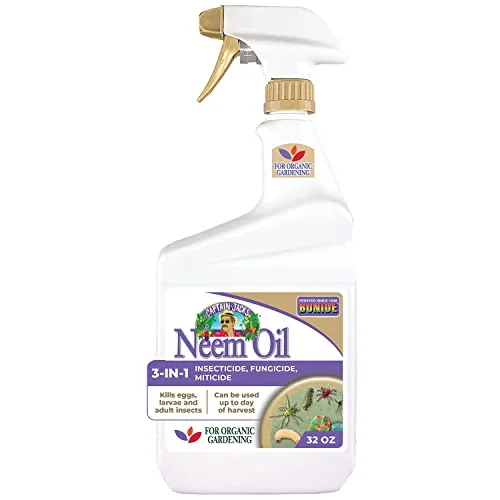
Captain Jack's Neem Oil Ready-to-Use, 32 oz

The most versatile first bottle: a ready-to-use neem spray whose label covers common soft-bodied insects, mites, and several fungal diseases in one product.

Picked for: Gentle first-line · Disease control

✓ One bottle covers insects, mites, and listed fungal diseases✕ Needs direct contact and repeat sprays per label
Our research on the Bonide Captain Jack's Neem Oil Ready-to-Use, 32 oz

This is the one bottle on the list that covers both bugs and leaf diseases. Bonide lists mites, aphids, whiteflies and flies across egg, larva and adult stages, plus black spot, powdery mildew and rust, on vegetables, fruit, herbs, roses, houseplants, trees and turf. Bonide also says it can be used up to the day of harvest and as a dormant spray. The insecticidal soap below is cheaper for a simple aphid problem, and copper is the stronger disease-only choice. Neem still has to hit the pest directly, and the label sets the timing for repeat sprays.

Best for
A beginner who wants one ready-to-spray bottle for soft-bodied bugs, mites and common fungal spots on edibles and roses.
Skip it if
You only have caterpillars (choose the Monterey B.t.) or slugs (choose Sluggo Plus).
  • One bottle covers insects, mites, and listed fungal diseases
  • Ready-to-use — no mixing or measuring
  • Labeled for many edible plants (check your bottle)
  • Needs direct contact and repeat sprays per label
  • Can burn leaves if sprayed in hot sun — follow label timing
Active ingredientClarified hydrophobic extract of neem oil
FormReady-to-use spray
Size32 oz
TargetsSoft-bodied insects, mites, listed fungal diseases
Organic useApproved for organic gardening
EdiblesUp to day of harvest
Also controlsBlack spot, powdery mildew, rust
Pick 2
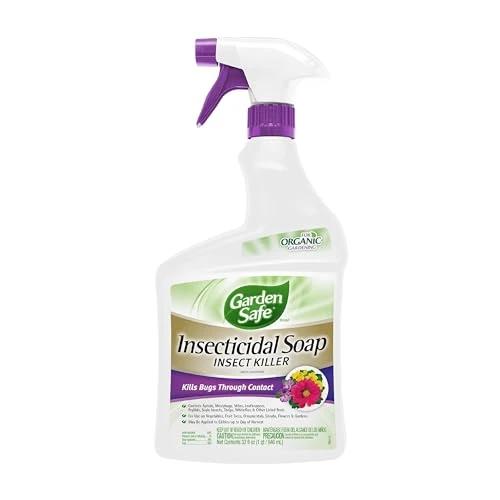
Insecticidal Soap Insect Killer, 32 oz Ready-to-Use

The cheap, gentle first answer to aphids and mites: a ready-to-use fatty-acid soap that works on contact, and that the label allows on edibles up to the day of harvest.

Picked for: Gentle first-line · Best value

✓ No mixing — spray straight from the bottle✕ Zero residual effect — only kills what it wets
Our research on the Garden Safe Insecticidal Soap Insect Killer, 32 oz Ready-to-Use

The cheapest bottle here and the gentlest first step. The label lists 1% potassium salts of fatty acids, which kill aphids, mealybugs, mites, scale, thrips, whiteflies and other listed pests on contact, and it also lists powdery mildew. It is labeled for indoors, outdoors and greenhouses, on vegetables, fruit trees and houseplants, up to and including harvest day. The trade-off: there is no residue, so you must wet the pests directly and repeat weekly or every two weeks. The label warns against use on sweet peas, nasturtiums and delicate ferns, and against spraying in full sun.

Best for
Gardeners with aphids or mites on vegetables or houseplants who want a low-cost, harvest-day-safe contact spray.
Skip it if
You need fungal-disease protection beyond powdery mildew; choose Captain Jack's Copper Fungicide or the Neem Oil instead.
  • No mixing — spray straight from the bottle
  • Label allows use on edibles up to and including harvest day
  • Works on listed soft-bodied pests indoors, outdoors and in greenhouses
  • Zero residual effect — only kills what it wets
  • Only small larvae like tent caterpillars are on the label; use a BT product for cabbage worms
Active ingredientSoap (fatty acid salts)
FormReady-to-use spray
Size32 oz
TargetsAphids, mites, whiteflies, mealybugs, other listed soft-bodied pests
Organic useLabeled for organic gardening
EdiblesUp to and including harvest day
Reapply intervalWeekly or every 2 weeks as needed
Active strength1% potassium fatty acid salts

Sources

Research checked Nov 17, 2026. We research picks; we don't test them.
Pick 3
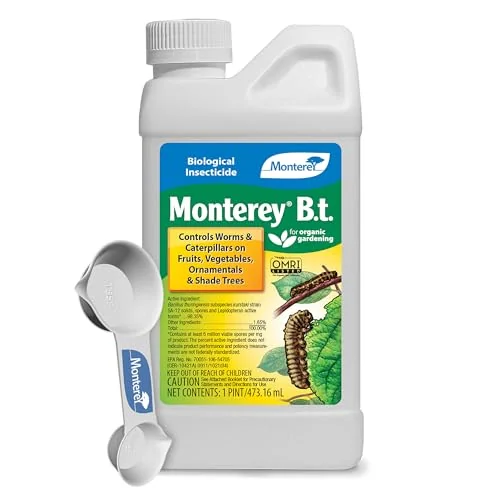
B.t. Biological Insecticide Concentrate, 16 oz

The caterpillar specialist: Bacillus thuringiensis kurstaki targets hornworms, cabbage worms, and other listed caterpillars specifically, and a pint of concentrate lasts most gardens a season or more.

Picked for: Gentle first-line

✓ Targets caterpillars without broad-spectrum collateral✕ Only works on caterpillars actively feeding on sprayed leaves
Our research on the Monterey B.t. Biological Insecticide Concentrate, 16 oz

The only pick aimed squarely at caterpillars. The active ingredient is Bacillus thuringiensis kurstaki (98.35% of the concentrate), a bacterium that worms must eat; they stop feeding soon after, though they may look fine for several days. The label lists cabbage loopers, imported cabbage worms and tomato hornworms on vegetables, plus bagworms and tent caterpillars on trees and shrubs. Retailer copies of the label say it has no effect on birds, earthworms, honeybees or ladybugs when used as directed. The catch: it is a concentrate you mix, it needs repeating every 5–7 days while caterpillars are active, and after heavy rain.

Best for
Vegetable growers fighting hornworms or cabbage worms who want a caterpillar-only spray that is OMRI Listed.
Skip it if
Your problem is aphids, mites or slugs; choose the Garden Safe soap or Sluggo Plus.
  • Targets caterpillars without broad-spectrum collateral
  • Concentrate mixes many gallons — strong cost per season
  • OMRI listed for organic gardening
  • Only works on caterpillars actively feeding on sprayed leaves
  • Breaks down in sunlight — reapply per label after rain
Active ingredientBacillus thuringiensis subsp. kurstaki
FormLiquid concentrate
Size16 oz
TargetsHornworms, cabbage loopers, other listed caterpillars
Organic useOMRI Listed
EdiblesUp to and on day of harvest
Reapply intervalEvery 5–7 days while active
Active strength98.35% B.t. kurstaki SA-12
Pick 4
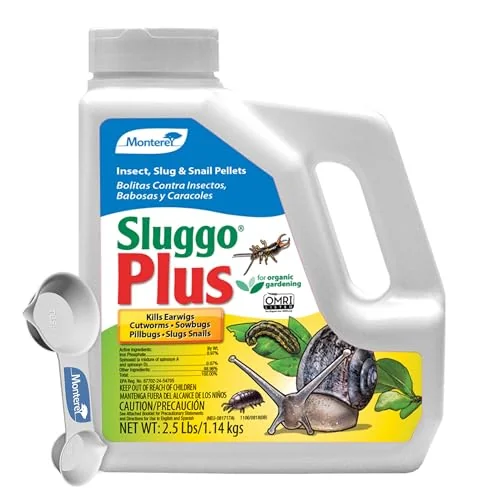
Sluggo Plus Slug, Snail & Insect Bait, 2.5 lb

The premium bait for the slug-and-earwig crowd: iron phosphate plus spinosad pellets you scatter per the label, covering slugs, snails, earwigs, and other listed crawlers.

Picked for: Slugs & snails

✓ Iron phosphate plus spinosad covers more than slugs alone✕ Priciest per pound of our picks
Our research on the Monterey Sluggo Plus Slug, Snail & Insect Bait, 2.5 lb

The only bait on the list, and it reaches beyond slugs. It pairs iron phosphate with spinosad, and retailers list slugs, snails, earwigs, sow bugs, pill bugs and cutworms on the label, with Grow Organic adding crickets. It is OMRI Listed and, per Chalet Nursery's listing, can be used in vegetable gardens up to the day of harvest. One pound covers about 1,000 sq ft, so a 2.5 lb jug treats roughly 2,500 sq ft per application. It costs the most here, and the label asks you to scatter pellets evenly rather than in piles and to follow its precautions for pets and wildlife.

Best for
Gardeners whose seedlings and lettuce get chewed overnight by slugs, snails, earwigs or pill bugs.
Skip it if
Your damage comes from aphids, mites or caterpillars on leaves; choose the soap, neem or B.t. sprays instead.
  • Iron phosphate plus spinosad covers more than slugs alone
  • Pellets stay effective after rain longer than traps
  • OMRI listed; labeled for use around edibles per directions
  • Priciest per pound of our picks
  • Still a bait — apply exactly as the label directs around pets
Active ingredientIron phosphate + spinosad
FormGranular bait
Size2.5 lb
TargetsSlugs, snails, earwigs, other listed soil pests
Organic useOMRI Listed
EdiblesUp to day of harvest
CoverageAbout 1 lb per 1,000 sq ft

Sources

Research checked Nov 17, 2026. We research picks; we don't test them.
Pick 5
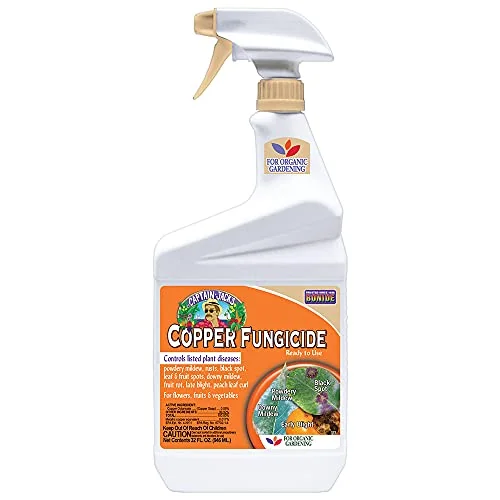
Captain Jack's Copper Fungicide Ready-to-Use, 32 oz

The disease-side staple: a copper spray labeled for common fungal and bacterial problems like early blight and powdery mildew, best used preventively before disease takes hold.

Picked for: Disease control

✓ Labeled for both fungal and listed bacterial diseases✕ Cannot cure leaves already infected — timing is everything
Our research on the Bonide Captain Jack's Copper Fungicide Ready-to-Use, 32 oz

The disease specialist, and the cheapest bottle on the list. Bonide says it controls downy mildew, powdery mildew, black spot, rust, leaf spot, blight, late blight, fruit rot and peach leaf curl using low concentrations of copper, on vegetables, fruit, nuts, herbs, roses and ornamentals. It is approved for organic gardening, usable up to the day of harvest, and works in both dormant and growing seasons. Unlike the neem oil, it does nothing for insects. The trade-off is repetition: Bonide says to coat tops and undersides of leaves and repeat every 7–10 days as needed.

Best for
Tomato and rose growers who see blight, mildew or black spot every year and want to spray before it spreads.
Skip it if
Your plants have insects rather than spots or mildew; choose the Neem Oil or Garden Safe soap.
  • Labeled for both fungal and listed bacterial diseases
  • Works preventively on tomatoes prone to blight
  • Concentrate version available for refill savings
  • Cannot cure leaves already infected — timing is everything
  • Repeated heavy use adds copper to soil — follow label rates
Active ingredientCopper octanoate (copper soap)
FormReady-to-use spray
Size32 oz
TargetsEarly blight, powdery mildew, other listed diseases
Organic useApproved for organic gardening
EdiblesUp to day of harvest
Reapply intervalEvery 7–10 days as needed
Comparison of every pest control pick
Pick
Bonide Captain Jack's Neem Oil Ready-to-Use, 32 oz#1
Mid-rangeBonide Captain Jack's Neem Oil Ready-to-Use, 32 oz
Garden Safe Insecticidal Soap Insect Killer, 32 oz Ready-to-Use#2
BudgetGarden Safe Insecticidal Soap Insect Killer, 32 oz Ready-to-Use
Monterey B.t. Biological Insecticide Concentrate, 16 oz#3
Mid-rangeMonterey B.t. Biological Insecticide Concentrate, 16 oz
Monterey Sluggo Plus Slug, Snail & Insect Bait, 2.5 lb#4
PremiumMonterey Sluggo Plus Slug, Snail & Insect Bait, 2.5 lb
Bonide Captain Jack's Copper Fungicide Ready-to-Use, 32 oz#5
Mid-rangeBonide Captain Jack's Copper Fungicide Ready-to-Use, 32 oz
Price & buy

$10.49

Check price on Amazon

$8.49

Check price on Amazon

$22.82

Check price on Amazon

$36.99

Check price on Amazon

$11.32

Check price on Amazon

Prices checked Oct 10, 2026 and change often. Specs are as the manufacturers state them. We may earn a commission from qualifying Amazon purchases.

How to choose pest control

Identify before you spray

Most spray disappointments are identification failures — soap does nothing to caterpillars, BT does nothing to aphids, and fungicide can't cure leaves already ruined. Catch the culprit in the act, or ask your county extension office to identify a photo, then buy the product whose label names that pest.

Start at the gentle tier

Insecticidal soap and neem handle soft-bodied insects like aphids and mites. BT (Bacillus thuringiensis) targets caterpillars specifically, and iron phosphate baits handle slugs and snails. These narrow tools spare pollinators and beneficial insects better than broad-spectrum sprays — spray at dusk when bees aren't foraging, per label directions.

The label is the law — literally

A pesticide label is a legally binding document: it defines what pests, what plants, what dose, and how many days before harvest you can pick. Treat every safety and edibles claim as the manufacturer's to make, not ours — read the label of the exact product in your hand and follow it, every time.

What we didn't pick — and why1 product we researched for this category and left off the list. Tap to read the reasons.
  • Safer Brand Insect Killing Soap Ready-to-Use, 32 oz

    Checked Sep 13, 2026

    A solid soap spray, but its Amazon listing showed as unavailable with no date for restock on our check. The closest Safer product still listed is an oil-based spray rather than a soap, so we switched to Garden Safe's insecticidal soap.

Common questions

Can I use these products on vegetables I'm going to eat?

Only the label can answer that for a specific product. Many neem, soap, BT, and iron phosphate products are labeled for edible gardens, often with a short or zero pre-harvest interval — but formulations differ, so check the label on your exact bottle and follow its harvest-wait directions.

Are these gentler products safe around bees and pets?

Gentler is not the same as harmless, and we only repeat what manufacturers state. Soaps and oils can harm insects they directly wet, so labels commonly direct spraying when pollinators aren't active. For pets, follow each label's re-entry and storage directions — bait products in particular should be applied exactly as directed.

Why didn't my neem or soap spray work?

The usual reasons: wrong pest for the product, or missed contact. Soap and oil only work when they directly coat the insect, so undersides of leaves matter and repeat applications per the label are normal. If the pest is a caterpillar, switch to a BT product — soap won't touch it.

More in Soil & Feeding