Raised Bed vs In-Ground Gardening: Which to Choose
5 min readPublished Primer Path Level 2
Researched and written by the GardenPrimer editorial team · How we research
The quick answer
Choose a raised bed when your native soil is heavy clay, pure sand, or suspect, or when bending is hard. Choose in-ground when your soil already grows weeds well, you want a large garden, or your summers are hot and dry. The frame is cheap; the soil to fill it is not.
Our top-scored picks for this decision
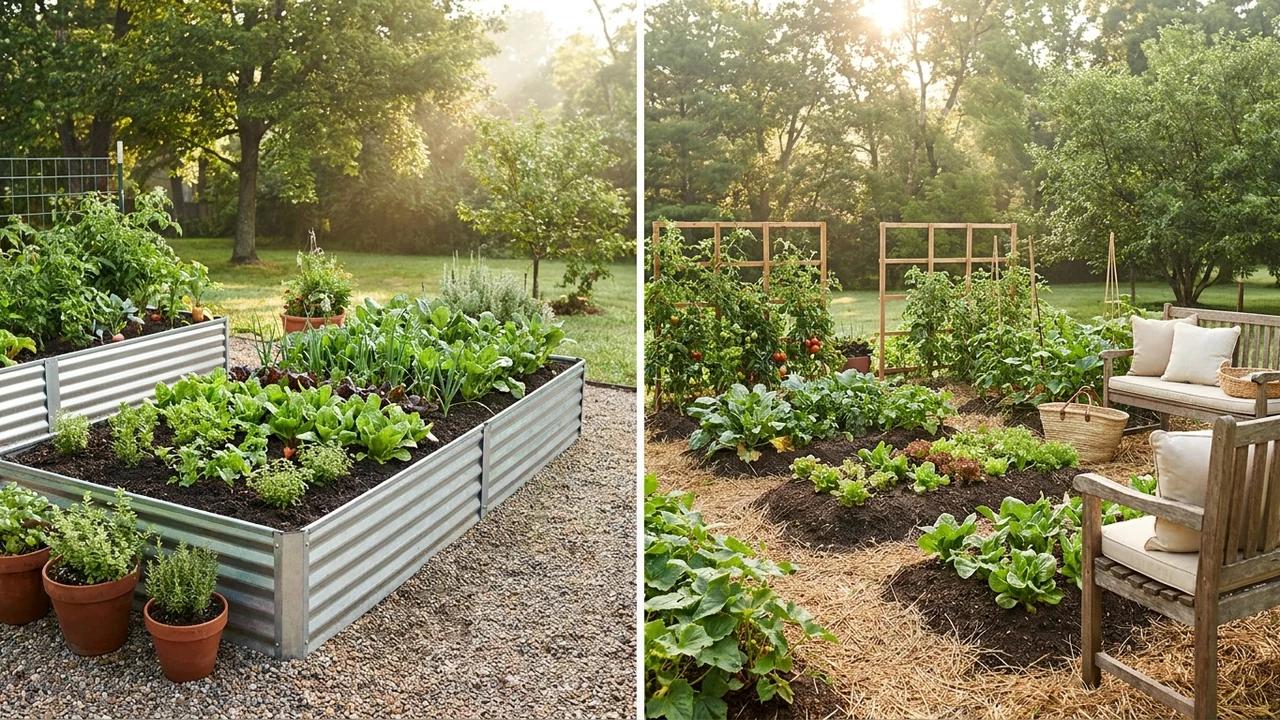
Almost every new gardener hits this fork within a week of deciding to grow food: build a raised bed, or dig into the ground you already have. Raised beds dominate the photographs, which makes in-ground gardening feel like the lesser option. It is not. The right answer depends on your soil, your budget, your back, and how hot your summers run. Here is the honest comparison, plus the one cost most people do not see coming.
| Factor | Raised bed | In-ground | Verdict |
|---|---|---|---|
| Upfront cost | Frame plus imported soil | Little more than a fork and compost | In-ground, by a wide margin |
| Soil quality control | Total — you choose the mix | You improve what you inherit | Raised bed |
| Drainage | Excellent, sometimes too fast | Depends entirely on your site | Raised bed on heavy clay |
| Summer watering | More frequent, dries from the sides | Holds moisture longer | In-ground |
| Spring warm-up | Earlier by a week or two | Slower | Raised bed |
| Kneeling and bending | Reduced at 15 inches and up | Full ground-level work | Raised bed |
| Ease of expanding | Each new bed is a new purchase | Turn more sod, spend almost nothing | In-ground |
| Weed and grass pressure | Lower, with a barrier underneath | Higher along every edge | Raised bed |
Cost, and the soil-fill trap
The frame is the advertised price. The soil is the real one, and volume math surprises people.
- A 4-by-8-foot bed filled about 11 inches deep needs roughly 29 cubic feet of soil.
- At 1.5 cubic feet per bag, that is around 20 bags for one bed.
- Bulk soil delivered by the yard costs far less per cubic foot than bagged mix, but usually carries a minimum order and a delivery fee.
Two ways to cut the fill cost honestly: build shallower where you can — 10 to 12 inches is enough for nearly every vegetable except long carrots and parsnips — or fill the bottom third with coarse organic matter such as branches and leaves, and top with real soil. Compost you make yourself replaces the most expensive component; see composting for beginners and the tumblers in composters.
In-ground beds skip all of that. You are buying compost and your own labor.
Soil control is the real argument for raised beds
Everything else is secondary. A raised bed lets you start with a good growing medium on day one instead of spending three seasons rebuilding what is there. That matters most when:
- Your native soil is heavy clay that stays waterlogged into late spring.
- Your soil is nearly pure sand and will not hold water or nutrients.
- You garden over rubble, tree roots, or a former construction pad.
- You have any reason to suspect contamination — near an old painted structure, a former driveway, or an industrial site. Test first; a soil test through your land-grant extension service, a public resource hub for home gardeners, is inexpensive and worth doing before you eat anything you grow.
If none of those apply and your ground grows decent grass and weeds already, that is real evidence it will grow vegetables.
Drainage cuts both ways
Raised beds drain fast. That is a rescue on clay and a liability in a dry, windy August, when a bed loses moisture through the sides as well as the surface. Expect to water a raised bed more often than an in-ground row, not less.
- Deeper beds dry out more slowly than shallow ones.
- Wood and fabric dry faster than metal or masonry sides.
- Mulch matters more in a raised bed, not less.
- Drip irrigation makes raised beds genuinely low-effort. Start with drip irrigation for raised beds and the kits in drip irrigation.
Watering rhythm is where most raised-bed disappointments actually originate — how often to water a vegetable garden covers the adjustments by season.
Ergonomics: the quiet deciding factor
If bending is painful, this stops being a soil discussion. A bed at 15 to 24 inches lets you sit on the edge; at 28 to 32 inches you can garden standing. Keep beds no wider than four feet, or two feet if you can only reach one side, so you never step on the growing area. The scored options in raised garden beds list working heights alongside materials.
When in-ground genuinely wins
Do not build a bed out of habit. In-ground is the better call when:
- Your existing soil is decent. Loam that drains and grows weeds vigorously needs compost, not replacement.
- You want a large garden. Corn, potatoes, winter squash, and pumpkins sprawl. Bed-ifying that acreage is expensive theater.
- Your summers are hot and dry. Ground soil buffers heat and moisture better than a container with sides.
- You are not sure you will stick with it. A dug row costs a weekend. A bed costs a purchase.
- You garden on a slope. Level in-ground terraces or contour rows often work better than a bed that needs shimming.
A hybrid is where most gardeners land: one or two raised beds near the door for salad greens, herbs, and the crops you pick daily, plus an in-ground patch further out for the sprawlers. That gives you soil control where it pays and cheap square footage where it does not.
Whichever you choose, feeding and watering matter far more than the container. The sequence for either is in how to start a vegetable garden.
Where this fits on the Primer Path
Choosing between a bed and a row is the opening decision of Level 2: First Bed, which walks you through siting, sizing, filling, and running one growing space for a full season. Never grown anything yet? Level 1: First Pot skips this decision entirely. The full free curriculum is at The Primer Path.
Common questions
Are raised beds actually better than in-ground gardens?+
Only in specific conditions. Raised beds win when your native soil is poor, waterlogged, or suspect, when you want an earlier spring start, or when bending is painful. If your ground already grows weeds vigorously and drains, an in-ground bed performs just as well for far less money.
How deep does a raised bed need to be?+
Ten to twelve inches of good soil suits nearly every vegetable, including tomatoes. Go deeper mainly for long carrots and parsnips, or for ergonomic reasons. Deeper beds also dry out more slowly, which helps in hot summers but adds meaningfully to fill cost.
Why do raised beds dry out so fast?+
A raised bed loses moisture through its sides as well as its surface, and it sits above the surrounding grade so it cannot wick water up from deeper soil. Expect to water more often than an in-ground bed, and mulch the surface to slow evaporation.
Can I put a raised bed on top of grass?+
Yes. Mow the grass short, lay overlapping cardboard across the footprint, then fill the bed on top. The grass dies under the barrier and the cardboard breaks down within a season, letting roots reach the soil below. Skip plastic weed fabric, which blocks drainage.