Mulch 101: What to Use, When to Apply, and How Deep
5 min readPublished Primer Path Level 2
Researched and written by the GardenPrimer editorial team · How we research
The quick answer
Spread 2 to 3 inches of organic mulch such as straw, shredded leaves or wood chips over your soil once it has warmed in spring. Keep it a few inches back from stems and trunks. It holds moisture, blocks weeds, and slowly feeds the soil as it breaks down.
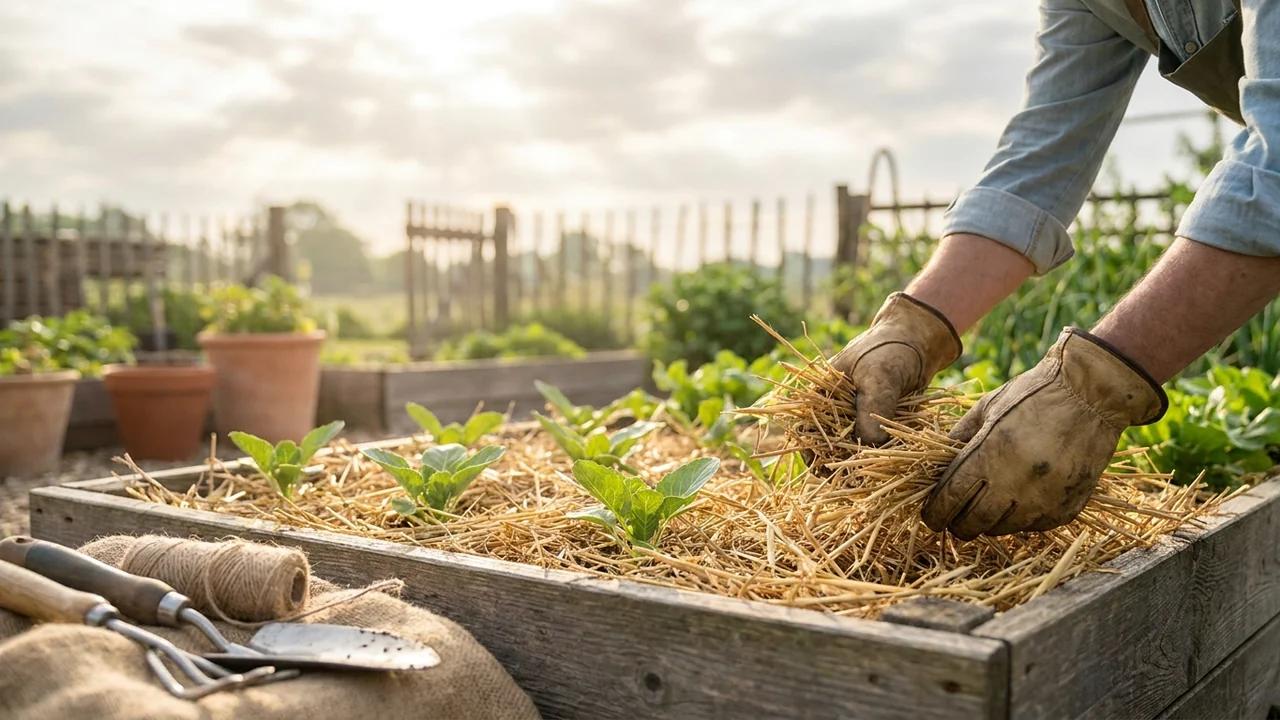
Mulch is the closest thing beginner gardening has to a cheat code. A layer of organic material sitting on top of the soil holds moisture in, keeps weed seeds in the dark, evens out soil temperature swings, and — the part most people miss — slowly feeds the soil underneath as it breaks down. It costs little, takes an afternoon, and pays you back every week of the season. The catch is that mulching goes wrong in two predictable ways: the wrong depth, and the wrong placement. Both are easy to avoid once someone names them for you.
The 2-to-3 inch rule
Almost every mulch question resolves back to depth. Two to three inches of loose organic mulch is the sweet spot for vegetable beds and ornamental plantings alike.
- Under 1 inch: light still reaches weed seeds, and the layer dries out and blows around.
- 2 to 3 inches: weeds are suppressed, moisture holds, and rain still soaks through.
- 4 inches and up: water can shed off the surface, and the soil beneath stays soggy and airless.
Fluffy materials like straw and shredded leaves settle. Lay them a little thicker than your target — say 3 to 4 inches of loose straw — and they will compress to roughly the depth you wanted within a couple of weeks.
Fine-textured mulches (grass clippings, compost) mat down and should stay closer to 1 to 2 inches. Chunky ones (bark, wood chips) breathe well and can sit at the top of the range.
Which mulch should you use?
There is no single best mulch — there is a best mulch for a given bed. Vegetable beds want something that breaks down fast and feeds the soil. Paths and shrub borders want something that lasts.
| Material | Cost | Best for | Cautions |
|---|---|---|---|
| Straw (not hay) | Low | Vegetable beds, strawberries, potatoes | Hay carries weed and grass seed; buy straw. Ask about herbicide history |
| Shredded leaves | Free | Vegetable beds, perennial borders, overwintering | Whole leaves mat into a waterproof crust — shred or mow them first |
| Wood chips or bark | Low to moderate | Paths, shrubs, trees, perennial beds | Keep out of annual veg beds where you dig each season |
| Grass clippings | Free | Quick summer top-up between veg rows | Only from untreated lawns. Apply thin and dry, or it turns slimy |
| Finished compost | Moderate | Feeding beds while mulching them | Weeds germinate happily in it. Best as a bottom layer under straw |
Two honest notes. First, "landscape fabric plus rock" is not mulch in the sense that matters here — it suppresses weeds but feeds nothing and eventually collects a layer of windblown soil that grows weeds anyway. Second, dyed wood mulch is cosmetic; the dye is not the problem so much as the unknown wood underneath it.
When to mulch
Timing matters more than most beginners expect, and the mistake is almost always mulching too early in spring.
| Timing | What to do | Why |
|---|---|---|
| Early spring | Pull mulch back off the beds | Bare soil warms faster; mulched soil stays cold and slows seed germination |
| After planting, once soil is warm | Lay 2 to 3 inches around established plants | Locks in moisture right as the heat arrives |
| Midsummer | Top up thin spots | The layer has already begun breaking down |
| Late fall, after the ground cools | Mulch perennials and empty beds | Prevents freeze-thaw heaving and stops winter weeds |
For direct-sown crops, mulch the pathways first and wait to mulch the rows until seedlings are a few inches tall — otherwise you are burying the very thing you planted. If you are still working out your sowing windows, the planting calendar lines everything up against your frost dates.
The mistake with a name: mulch volcanoes
Piling mulch up against a plant stem or a tree trunk is so common that it has its own nickname. It traps moisture against bark, invites rot and boring insects, and encourages roots to grow up into the mulch instead of down into the soil.
- Spread mulch in an even, flat layer — a doughnut, never a cone.
- Leave a few inches of bare soil around every stem and trunk.
- Widen the ring outward instead of building it upward; the roots are out there, not at the trunk.
- Check established trees each spring and pull back anything that has crept inward.
The same logic applies in beds: mulch the soil, not the plant. A tomato stem buried in damp straw is an invitation to stem rot.
Mulch is slow food for your soil
This is the part that makes mulching worth doing even in a bed with no weed problem. Organic mulch is eaten from the bottom up by earthworms, fungi and bacteria, and what they leave behind is the crumbly organic matter that makes soil hold water and drain at the same time. It is composting in place, on a slower clock — the same process described in composting for beginners, just happening on the surface rather than in a tumbler or bin.
That makes mulch one of the few genuinely effective tools for heavy ground. If you are fighting compaction, a maintained mulch layer does over two or three seasons what a single amendment cannot; it is a core habit in improving clay soil.
- Mulch reduces watering frequency, which matters most in the first hot stretch of summer. Pair it with a sensible schedule from our guide to how often to water a vegetable garden.
- Mulch is not a fertilizer. It feeds soil life slowly; hungry crops still want a proper feed from organic fertilizers.
- Wood chips only tie up nitrogen where they physically contact soil, so they are fine on paths and around shrubs — just not tilled in.
Where this fits on the Primer Path
Mulching belongs to Level 2: Your First Bed, right after you have filled the bed and planted it. It is the habit that keeps a new bed from drying out and weeding itself into a chore by July. Lay it once, top it up midsummer, and let the worms do the rest.
Common questions
How deep should mulch be?+
Two to three inches is right for most beds. Thinner lets light reach weed seeds; thicker can shed rainwater and keep the soil soggy. Fluffy materials like straw settle, so lay them slightly deeper than your target and let them compress.
Does wood mulch steal nitrogen from my plants?+
Only at the thin boundary where wood physically touches soil, and only while it decomposes there. Left on the surface around shrubs, trees and paths it is not a problem. The issue arises when fresh chips are tilled into a bed.
Can I mulch with grass clippings?+
Yes, if the lawn was not treated with herbicide. Let clippings dry first and apply a thin layer, no more than an inch at a time. Piled on green and thick they mat, heat up and turn slimy rather than breaking down cleanly.
When should I mulch in spring?+
Wait until the soil has warmed and your plants are established, then apply. Mulching cold spring soil keeps it cold and slows germination. Many gardeners pull mulch back in early spring and re-lay it once the heat arrives.