What to Fill a Raised Bed With: The 60/30/10 Soil Mix
5 min readPublished Primer Path Level 2
Researched and written by the GardenPrimer editorial team · How we research
The quick answer
Fill a raised bed with roughly 60% screened topsoil, 30% compost and 10% coarse aeration such as perlite or pumice. Adjust to the materials you can get. For tall beds, fill the bottom third with logs, branches and leaves, and save the real mix for the top 12 to 18 inches.
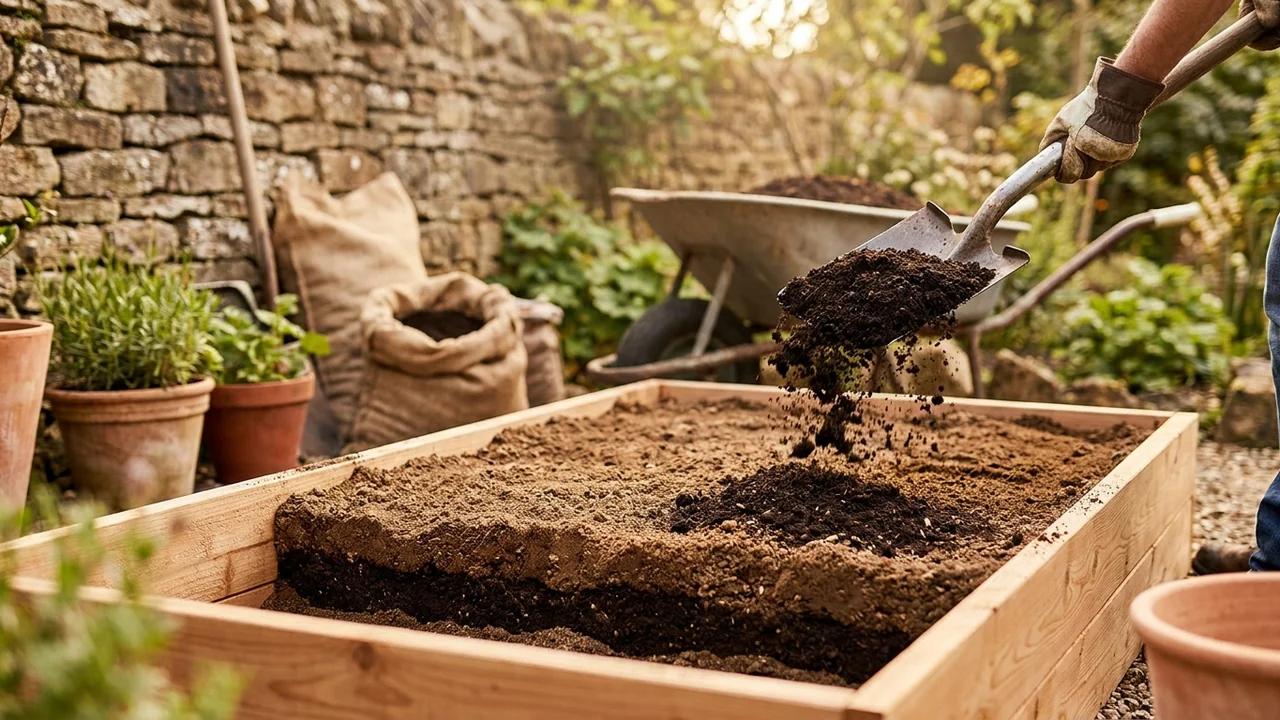
A raised bed is only as good as what goes into it, and the fill is the single biggest cost of building one. That combination — high stakes, high price — is exactly why beginners get talked into either the cheapest option (native dirt) or the most expensive one (a bed filled entirely with bagged potting mix). Neither works well. What does work is an unglamorous blend built around drainage, organic matter and a bit of grit, mixed at roughly the same ratio whether your bed is a stock tank or a cedar frame.
The 60/30/10 mix
Think of it as three jobs: bulk that holds structure, organic matter that holds water and nutrients, and something coarse that keeps the whole thing from packing down.
| Component | Share | What to buy | What it does |
|---|---|---|---|
| Screened topsoil or garden soil | ~60% | Bulk screened topsoil, or bagged raised-bed soil | Body and mineral content; holds the mix together |
| Compost | ~30% | Bagged compost, bulk leaf compost, or your own | Nutrients, water holding, soil biology |
| Aeration | ~10% | Coarse perlite, pumice, or coarse sand | Keeps drainage open as the mix settles |
The ratio is a starting point, not a recipe to defend. Adjust with the material in front of you:
- Heavy, clayish topsoil? Push aeration toward 15 to 20% and add a bit more compost.
- Very light, fluffy bagged mix? Drop the aeration; it is already in there.
- Growing carrots, parsnips or other roots? Sift out stones and lean sandier.
- Growing in a shallow bed (under 8 inches)? Skew richer — closer to a 50/40/10 split — since there is less volume to draw from.
Buy fill by volume, not by bag count. A 4-by-8-foot bed filled 12 inches deep is 32 cubic feet, or about 1.2 cubic yards. Run your own dimensions through the soil calculator before you order anything — it converts to both bags and yards, and it is the cheapest mistake-prevention on this site.
Tall beds: fill the bottom, don't buy it
Roots for nearly every home crop live in the top 12 inches or so. A 30-inch-tall metal bed does not need 30 inches of purchased soil, and filling one that way is how people end up spending more on dirt than on the bed.
- Lay cardboard on the ground to smother grass (skip it if the bed sits on a hard surface).
- Fill the bottom third to half with bulky organic material: logs, branches, twigs, sod flipped upside down, leaves, spent stalks.
- Add a buffer layer of leaves, straw or rough compost to stop soil sifting down into the gaps.
- Fill the top 12 to 18 inches with your real mix.
This hugelkultur-lite approach saves real money and, as the wood breaks down, creates a moisture reservoir. The trade-off is settling: expect the bed to drop noticeably in year one.
Do not use treated lumber, painted wood, black walnut, or anything you cannot identify as bottom fill.
Bagged vs bulk: where the crossover is
| Approach | Works best when | Watch out for |
|---|---|---|
| Bagged | One or two small beds, no truck access, want a known product | Cost per cubic foot is the highest of any option |
| Bulk delivered | Two or more beds, or anything over roughly a cubic yard | Delivery minimums and fees; quality varies by supplier |
| Bulk plus bagged compost | Most home gardens | Requires mixing on a tarp or in the bed |
A cubic yard is 27 cubic feet — about 18 of the common 1.5-cubic-foot bags. Once you are hauling that many bags, a bulk delivery is usually both cheaper and easier, and you can ask the supplier what the topsoil actually is before it lands in your driveway.
What not to fill a bed with
- Straight compost. It is too rich, holds too much water, and shrinks dramatically as it finishes. Great as 30% of a mix; poor as 100% of one.
- Native clay dug from the yard. In a bed it compacts into a brick that drains nowhere. It is fixable in the ground, and the approach is in our guide to improving clay soil, but it is not raised-bed fill.
- Mystery "topsoil" bags. The term is barely regulated. If the bag does not say what is in it, treat it as filler and mix accordingly.
- Potting mix, for a whole bed. Designed for containers; in bed volumes it dries out fast and costs a fortune.
- Fresh manure or unfinished compost. Let it age. Follow the label on any bagged amendment.
Year two: topping off
Every raised bed sinks. Organic matter is being consumed by soil life, which is the system working, not failing.
- Each spring, add 1 to 2 inches of compost across the surface and rake it level. Home-made works fine — see composting for beginners and the composter category.
- Do not dig the whole bed over. Top-dress and let worms carry it down.
- Feed the crop separately; compost is a soil amendment, not a fertilizer. Match the numbers on the bag to what you are growing, and browse organic fertilizers for options.
- Finish with 2 to 3 inches of mulch — the reasoning is in our mulching guide.
Still deciding whether a bed is the right call at all? The raised bed vs in-ground comparison covers the trade-offs, and raised garden beds has our scored picks by size and material.
Where this fits on the Primer Path
Filling a bed is the first real task in Level 2: Your First Bed. Get the mix roughly right, fill deep beds smartly, and plan on topping off each spring — that is genuinely the whole of it. Measure first, order once.
Common questions
How much soil does a 4x8 raised bed need?+
A 4-by-8-foot bed filled to 12 inches holds 32 cubic feet, roughly 1.2 cubic yards. Fill it 6 inches deep and you need half that. Enter your own dimensions in the soil calculator, which converts the total into both bags and cubic yards.
Can I fill a raised bed with just compost?+
Not well. Pure compost holds too much water, is richer than most crops want, and shrinks sharply as it finishes decomposing, leaving the bed half empty. Compost works best as about a third of a mix, with topsoil providing the body.
Is it okay to put wood in the bottom of a raised bed?+
Yes, for tall beds. Untreated logs, branches and leaves in the bottom third save money and hold moisture as they break down. Avoid treated or painted lumber and black walnut. Expect the bed to settle noticeably during the first season.
Do I need to replace raised bed soil each year?+
No. Beds sink because soil life is consuming organic matter, which is the system working. Top-dress with an inch or two of compost each spring, rake it level, and add mulch. Replacing the whole bed is unnecessary and expensive.
The gear in this guide, scored
- 78PrimerScore
Raised Garden Beds
Top pick: Vego Garden 17" Tall 9-in-1 Modular Metal Raised Garden Bed · $179.95
- 83PrimerScore
Compost Bins & Tumblers
Top pick: VIVOSUN Tumbling Composter, 43 Gallon Dual Chamber · $79.99
- 84PrimerScore
Organic Fertilizers & Soil Amendments
Top pick: Espoma Garden-tone Organic Herb & Vegetable Food 3-4-4, 4 lb