How to Improve Clay Soil: A Realistic Beginner Plan
5 min readPublished Primer Path Level 4
Researched and written by the GardenPrimer editorial team · How we research
The quick answer
Improve clay soil by adding organic matter every year and keeping the surface mulched. Never add sand, which combines with clay to set like concrete. Loosen with a broadfork rather than a tiller, and stay off the soil when it is wet. Expect real improvement over two to three seasons.
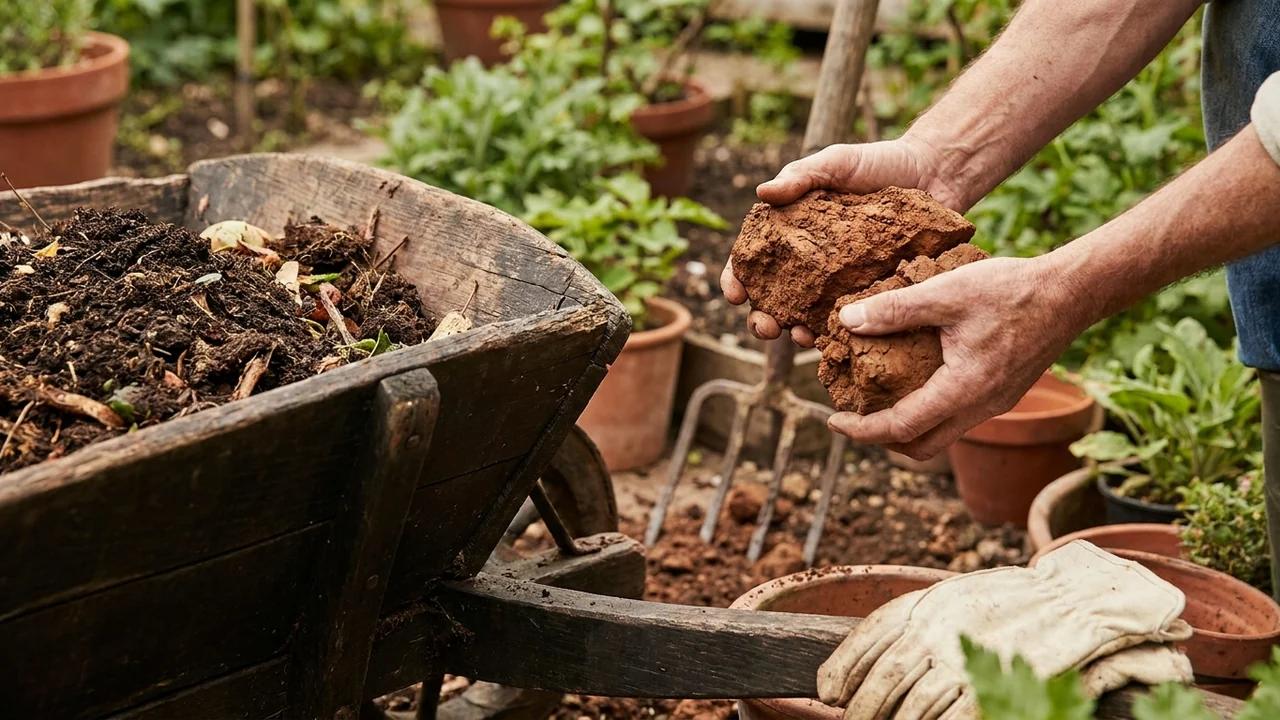
Clay soil is not a defect. It holds water and nutrients better than sand ever will, and gardens grown on improved clay are some of the most productive there are. The problem is timing and structure: clay is sticky when wet, brick-hard when dry, and slow to warm in spring. The fix is real but it is measured in seasons, not weekends. Here is the honest version of what works.
First, confirm you actually have clay
Heavy, compacted, or poorly drained soil is not automatically clay. Two kitchen tests settle it.
The ribbon test takes two minutes:
- Take a walnut-sized lump of moist soil from about 6 inches down.
- Roll it into a ball, then squeeze it upward between thumb and forefinger into a ribbon.
- A ribbon under 1 inch before it breaks means loam. Between 1 and 2 inches means clay loam. Over 2 inches and it feels slick, not gritty, means clay.
The jar test takes a day but tells you more:
- Fill a straight-sided jar one third with soil, top with water, add a drop of dish soap, shake hard.
- Sand settles in a minute, silt in a few hours, clay over a day or more.
- Measure each band. Clay is the top layer, and if it is roughly a third or more of the total, you are working clay.
Never work clay when it is wet. Squeeze a handful: if it holds a shiny fingerprint and smears, walk away. Digging or tilling wet clay destroys the crumb structure you are trying to build and the damage lasts for years.
Why compost beats sand
The most common piece of bad advice is to add sand. Extension services across the country warn against it for a simple reason: the mix behaves like concrete. Clay particles fill the spaces between sand grains, and unless you add sand in absurd volume, you end up denser than you started.
| Amendment | What it actually does | Verdict |
|---|---|---|
| Compost | Feeds microbes that bind particles into crumbs | The main tool |
| Aged leaf mold | Slow, gentle structure building | Excellent and free |
| Sand | Fills pores between clay particles | Avoid |
| Gypsum | Helps only sodic soils, rare outside arid regions | Skip unless a soil test says otherwise |
| Peat | Adds organic matter but acidifies and is not renewable | Compost is better |
Organic matter is what creates aggregate structure: particles clumped into crumbs with air spaces between them. Roots, water, and worms all move through those spaces. Making your own is the cheapest route, and a dual-chamber tumbler or any bin from the composters shelf gets you there. Start with composting for beginners, and the EPA's home composting resource hub covers the basics of what to include.
Broadfork or till? An honest answer
Tilling clay looks like progress and often is not. It shatters aggregates, buries organic matter too deep for the microbes that need air, and creates a compacted pan right below the tine depth.
- A broadfork lifts and fractures the soil without inverting it. You keep the layering, open channels for water, and do not destroy structure. It is the better tool on established beds.
- A single initial tilling to incorporate a heavy compost application into a brand new bed is defensible. Doing it every season is not.
- No-dig works too: compost on top, let worms carry it down. It is slower to show results but it is the least damaging option and requires the least effort.
Whichever route you take, feed the biology afterward. A balanced amendment from the organic fertilizers category, such as Espoma Garden-tone, supports the microbes doing the structural work. If the numbers on the bag are a mystery, NPK numbers explained untangles them.
Mulch as the slow, free fix
Mulch is the amendment that applies itself.
- A 2 to 3 inch layer of shredded leaves, wood chips, or straw feeds soil life from above as it breaks down.
- It stops raindrop impact, which is what seals a bare clay surface into a crust.
- It moderates the wet-dry swings that make clay crack and set hard.
- Keep it pulled back a couple inches from stems and trunks.
Left alone for a few seasons under mulch, clay improves without you touching a spade. The mulching guide covers depth and material choices.
The shortcut: build up instead of down
If you want a productive garden this year rather than in three years, do not fight the clay. Build on top of it.
- Loosen the native clay with a fork so roots and water can eventually pass through.
- Set a bed frame on top. The Vego 17 inch is a common starting size; browse raised garden beds.
- Fill with a proper blend rather than bagged topsoil, following raised bed soil mix.
- Use the soil calculator to work out how many cubic feet you need before ordering, because guessing is how people end up two yards short.
Raised bed vs in-ground gardening walks through the tradeoffs, and drainage on clay is one of the strongest arguments for going up.
A realistic timeline
| Timeframe | What to expect |
|---|---|
| Year 1 | Easier digging in amended areas; drainage still slow |
| Year 2 | Visible crumb structure, more worms, faster spring warm-up |
| Years 3 to 5 | Genuinely workable soil that drains after a storm |
| Ongoing | Annual compost and mulch to hold the gains |
Clay rewards patience more than effort. Add organic matter every year, keep the surface covered, stay off it when wet, and it will become the best soil you have ever gardened.
Where this fits on the Primer Path
Soil improvement is the backbone of Feed and Defend, the level where you stop reacting to problems and start building conditions that prevent them.
Common questions
Why should I never add sand to clay soil?+
Clay particles are small enough to fill the gaps between sand grains, so the mixture packs tighter than the clay did alone. Extension services routinely warn against it. Compost and other organic matter build crumb structure instead of destroying it.
How do I know if my soil is really clay?+
Try the ribbon test. Squeeze moist soil upward between thumb and finger. A ribbon longer than 2 inches that feels slick rather than gritty means clay. A jar test, where clay settles as the top band overnight, confirms it.
Is tilling clay soil a bad idea?+
Repeated tilling is. It shatters the aggregates you are trying to build and creates a compacted layer just below tine depth. One initial pass to mix compost into a new bed is defensible. After that, use a broadfork or go no-dig.
How long does it take to improve clay soil?+
Digging gets easier in the first season where you amended, but genuinely workable, well-draining soil usually takes three to five years of annual compost and continuous mulch. Raised beds give you a productive garden in the meantime.