Mowing Height Guide: How High Should You Cut Grass?
5 min readUpdated
Researched and written by the GardenPrimer editorial team · How we research
The quick answer
Most cool-season lawns do best cut at 3 to 4 inches, and most warm-season lawns at 1 to 2.5 inches. Whatever height you choose, never remove more than one third of the blade in a single mowing. Taller grass shades out weeds, roots deeper, and needs less water.
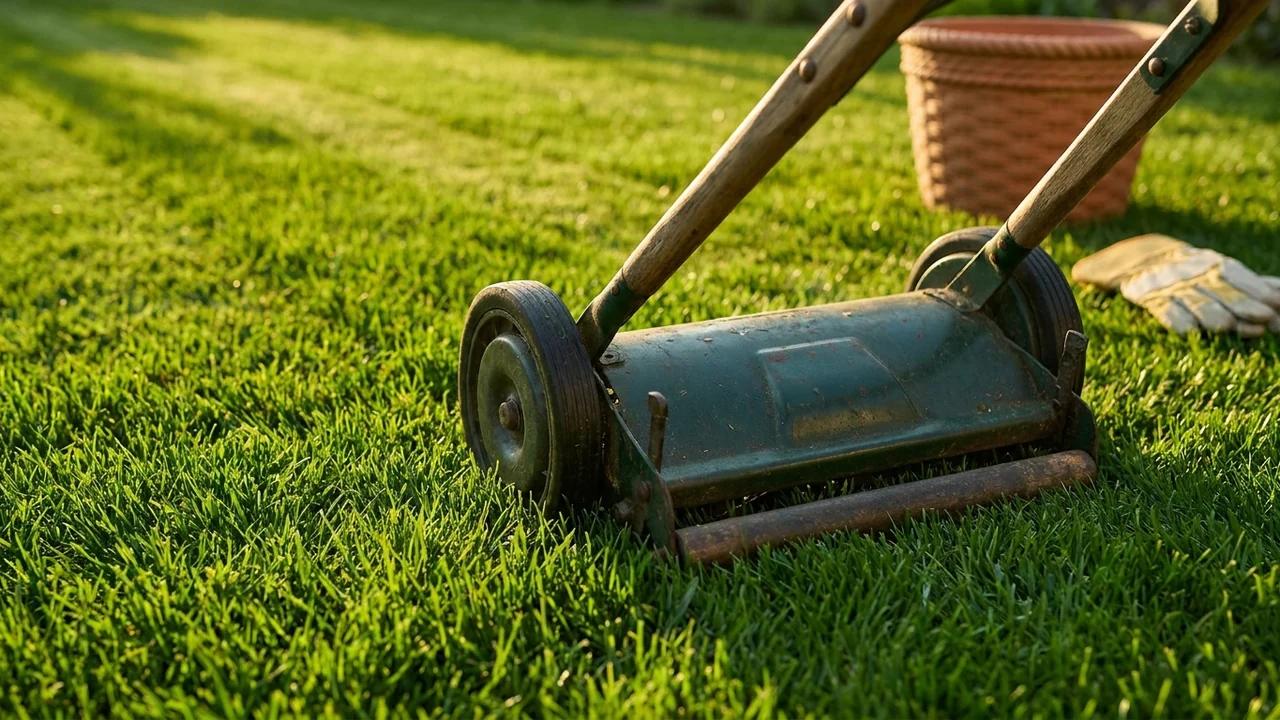
Mowing height is the cheapest upgrade available to a lawn. It costs nothing, takes one adjustment on the mower deck, and it changes how much water the grass needs, how many weeds germinate, and how well the lawn shrugs off a hot August. Most beginner lawns are cut too short, too infrequently, with a dull blade. Fix the height first and the rest gets easier.
The one-third rule
The single guideline worth memorizing: never remove more than one third of the blade height in a single pass.
If your target height is 3 inches, mow when the grass reaches about 4.5 inches. Cutting a 6-inch lawn back to 3 inches in one go removes half the leaf tissue and forces the plant to burn stored energy regrowing it.
What scalping actually costs you:
- Roots stop growing while the plant rebuilds leaves, so the lawn dries out faster.
- Bare soil warms and lights up, which is exactly what crabgrass seed waits for.
- Recovery pulls from reserves, leaving less to fight disease and foot traffic.
The practical version: mow more often in spring flush, less often in midsummer, and let the grass tell you rather than the calendar.
How high should you mow?
Grasses fall into two camps, and they want different things. Cool-season grasses grow hardest in spring and fall; warm-season grasses do their work in the heat.
| Grass type | Season | Typical mowing height | Notes |
|---|---|---|---|
| Tall fescue | Cool | 3 to 4 in | The most forgiving choice for a beginner lawn |
| Kentucky bluegrass | Cool | 2.5 to 3.5 in | Spreads and self-repairs; keep it on the tall side |
| Perennial ryegrass | Cool | 2 to 3 in | Fast to establish, often blended with the above |
| Bermudagrass | Warm | 1 to 2 in | Wants to be cut short and cut often |
| Zoysiagrass | Warm | 1 to 2.5 in | Slow growing, dense, tolerates a bit taller |
| St. Augustine | Warm | 2.5 to 4 in | The tall exception among warm-season lawns |
If you do not know what you have, check your state extension service, which publishes region-specific ranges. The University of Minnesota Extension yard and garden site is a good example of a public resource hub for this kind of regional guidance.
When in doubt, go taller
For cool-season lawns, the top of the recommended range is almost always the better default. Taller is more forgiving of a missed week, a heat wave, and an inexperienced operator.
Why taller grass gives you fewer weeds
Height is a weed-control tool that costs nothing and needs no label to follow.
- Shade at soil level. Crabgrass and many annual weeds need light hitting bare soil to germinate. A dense 3.5-inch canopy denies them that.
- Deeper roots. Leaf area drives root depth. Longer blades support a root system that reaches water lower in the profile.
- Cooler soil. Shaded soil loses less moisture, which matters most in the weeks you are least inclined to water.
- Fewer inputs. A lawn that outcompetes weeds needs less from the pest and disease control shelf and less from the fertilizer bag.
That last point is the real payoff. Height buys you resilience, and resilience is what lets you spend your attention on the vegetable beds instead.
Seasonal adjustments
You are not locked to one setting all year. Small shifts match the grass to the conditions.
| Season | Cool-season lawns | Warm-season lawns |
|---|---|---|
| Early spring | Drop slightly for the first cut to clear winter debris | Wait for full green-up before the first cut |
| Late spring | Return to the top of the range as growth surges | Cut short and frequently |
| Summer heat | Raise to the maximum; mow less often | Hold steady; this is peak growth |
| Fall | Hold tall through the fall growth window | Gradually raise as growth slows |
| Before dormancy | One slightly lower final cut to limit matting | Final cut at normal height |
Two habits matter as much as the number on the deck:
- Sharpen the blade. A dull blade tears rather than cuts, leaving frayed white tips that lose water and invite disease. Twice a season is a reasonable rhythm.
- Leave the clippings. Short clippings from one-third-rule mowing break down quickly and return nitrogen to the soil. Only bag when the grass got away from you.
Setting the height on your mower
Push and self-propelled mowers use a lever at each wheel or a single central lever. Measure once rather than trusting the numbered detents: set the mower on a hard flat surface and measure from the ground to the blade edge.
- Check all four wheels match, since a mismatched corner scalps on turns.
- Re-measure after new wheels or a deck repair.
- Battery mowers such as the Ego Power+ 21 inch hold height settings well, and cordless mowers generally make frequent short cuts painless because there is no engine to warm up.
A note on robot mowers
Robots change the math because they cut a little, constantly. That makes the one-third rule nearly automatic, and clippings are fine enough to disappear.
- Most models set height in software or with a dial. The Segway Navimow i210 AWD cuts at 2 to 3.6 inches, while the Mammotion Luba 2 goes lower, from about 1 to 3 inches.
- Check the top of a model's range against your grass type before buying. Several popular robots simply cannot reach 3.5 inches, which rules them out for a tall fescue lawn.
- Browse the field at robot mowers, and if you are weighing the two approaches, read robot mower vs cordless mower.
Where this fits on the Primer Path
Mowing height belongs to the maintenance rhythm you build in Steady Garden, the level where watering, feeding, and mowing become habits instead of emergencies. Pair it with how often to water a vegetable garden so the whole yard runs on one schedule, and with the mulching guide for the beds. If you are not sure which level you belong in, the Primer Path overview lays out all five in order.
Common questions
What is the one-third rule in mowing?+
Never cut off more than one third of the grass blade in a single pass. If you want a 3 inch lawn, mow when it reaches about 4.5 inches. Removing more forces the plant to spend stored energy regrowing leaves instead of roots.
Does cutting grass shorter mean mowing less often?+
No, it usually means the opposite over time. Short grass regrows quickly, dries out faster, and lets weed seeds germinate in the light reaching bare soil. A taller lawn holds moisture longer and stays presentable between cuts.
Should I bag or leave my clippings?+
Leave them when you are following the one-third rule. Short clippings break down within days and return nitrogen to the soil. Bag only when the lawn got away from you and the clippings are long enough to mat on the surface.
Can a robot mower cut tall fescue at the right height?+
Not all of them can. Many popular robots top out near 2.4 inches, which is below the ideal range for tall fescue. Check the maximum cutting height on the spec sheet against your grass type before choosing a model.