Worm Composting for Beginners: A Simple Bin Setup Guide
5 min readPublished Primer Path Level 4
Researched and written by the GardenPrimer editorial team · How we research
The quick answer
Worm composting uses red wigglers, not garden earthworms, in a shallow bin of damp bedding. You bury small amounts of kitchen scraps, keep the bedding as wet as a wrung-out sponge, and harvest dark castings every few months. Done right it lives indoors and does not smell.
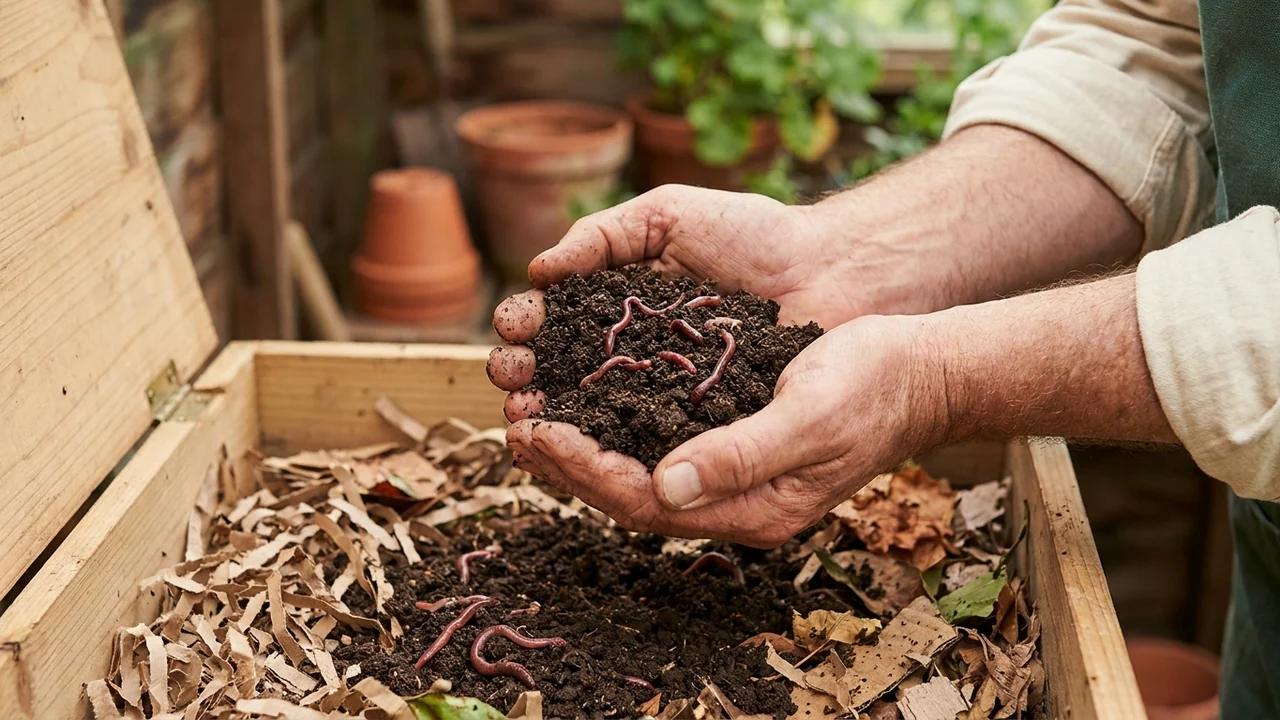
The best soil amendment in your garden is not one you can buy at a garden center. Worm castings, the dark crumbly material left behind after red wigglers eat their way through your vegetable peelings, do things a bagged fertilizer cannot. They feed plants gently, hold moisture, and carry the biology that makes soil behave like soil. A worm bin is also the only composting method that runs happily in a basement all winter, which is why it belongs in every beginner's toolkit alongside a regular composter.
Red wigglers, not earthworms
This is the mistake that sinks most first bins. The worms you dig up in the yard are burrowers built for deep soil. Composting worms are surface feeders that live in the top few inches of leaf litter.
| Red wigglers | Garden earthworms | |
|---|---|---|
| Lives | At the surface, in litter | Deep vertical burrows |
| Eats | Decaying organic matter | Soil and buried matter |
| Tolerates | Crowding, warmth, a bin | Neither crowding nor bins |
| Buy from | Worm suppliers, by the pound | Do not use |
Order red wigglers, sometimes sold as Eisenia fetida, from a worm supplier. A pound is a standard starter quantity for a household bin and the population adjusts itself to how much you actually feed.
Setting up the bin
You need three things: a shallow container, bedding, and patience for the first month.
- Container. Stacking worm bins are sold ready to go, and a plain plastic tote with small holes drilled in the lid and upper sides works just as well. Shallow beats deep, always.
- Bedding. Shredded newspaper, plain cardboard, coco coir, or a mix. Fill the bin loosely, most of the way up.
- Moisture. Dampen the bedding until it feels like a wrung-out sponge. Squeeze a handful: a drop or two, not a trickle.
- Add worms and leave the lid off under a light for an hour so they burrow down.
- Wait a week before the first feeding. Let them settle.
Bedding is not packaging, it is most of the diet. A bin that gets food but no fresh bedding turns into wet sludge. Add a fresh handful of shredded paper or cardboard every time you feed.
What to feed, and what never to
Feed small amounts, buried under the bedding in a different corner each time.
| Feed freely | Feed sparingly | Never |
|---|---|---|
| Vegetable and fruit peels | Citrus and onion | Meat and fish |
| Coffee grounds and filters | Bread and grains | Dairy |
| Crushed eggshells | Cooked leftovers | Oils and greasy food |
| Tea leaves | Very wet melon | Pet waste |
| Shredded paper, cardboard | Grass clippings | Anything salted |
A few practical habits make the difference:
- Chop scraps small. Worms work on surfaces, not volume.
- Freeze and thaw scraps first if you want them to break down faster.
- Underfeed rather than overfeed. Almost every problem below traces back to too much food.
- Bury every feeding. Exposed food is what attracts flies.
Troubleshooting
Worm bins fail in a small number of predictable ways, and all of them are fixable in a week.
| Symptom | Likely cause | Fix |
|---|---|---|
| Sour or rotten smell | Overfeeding, too wet | Stop feeding, add dry bedding, open the lid |
| Ammonia smell | Too much nitrogen-rich food | Add cardboard, skip a feeding cycle |
| Fruit flies | Exposed food scraps | Bury food, cover with damp paper |
| Worms climbing the walls | Bin too wet or too acidic | Add bedding, ease off citrus |
| Worms escaping entirely | Conditions they refuse | Rebuild bedding, check temperature |
| Bin drying out | Too much airflow, dry room | Mist the bedding, not soak it |
If in doubt, the answer is almost always the same: less food, more dry bedding. Worms are patient. A bin can go two or three weeks without a feeding and be perfectly happy.
Harvesting the castings
After a few months the lower bedding turns dark and crumbly with no recognizable scraps. Two easy methods:
- Move to one side. Push finished material to one half, put fresh bedding and all new food in the other half, and wait two weeks. Most worms migrate. Scoop the finished side.
- Light sorting. Tip the contents onto a tarp in cone-shaped piles under a bright light. Worms burrow down; scrape the tops off every few minutes until only worms remain.
Use castings sparingly, because a little goes a long way:
- A handful in each planting hole at transplant time.
- A thin top-dress around established plants, scratched in and watered.
- Mixed into potting mix at a modest fraction of the total volume.
- Stirred into heavy ground you are trying to rehabilitate, alongside the other tactics in our guide to improving clay soil.
Castings are not a replacement for feeding heavy croppers. They are low and balanced in the three numbers on a fertilizer bag, which our NPK explainer unpacks, so pair them with an organic fertilizer when you are growing tomatoes or corn.
Worm bin or regular compost?
Run both if you can. A tumbler handles volume and yard waste; a worm bin handles kitchen scraps year-round and produces a finer, more concentrated product. Our composting for beginners guide covers the hot-pile side. The EPA also keeps a home composting resource hub worth bookmarking.
Where this fits on the Primer Path
Worm composting belongs in Feed and Defend, the level where you stop treating soil as inert filler and start feeding it deliberately. It is a small commitment with an outsized payoff, and unlike most gardening projects it keeps working through January. Once you have castings to spread, the soil calculator helps you work out how much amended mix a bed actually needs, and the rest of the Primer Path picks up from there.
Common questions
Can I use earthworms from my garden?+
No. Garden earthworms are burrowers that tunnel deep through soil and will not thrive in a shallow bin of scraps. Worm bins need red wigglers, a surface-dwelling composting species sold by the pound specifically for this purpose.
Does a worm bin smell?+
A healthy bin smells like a forest floor, faintly sweet and earthy. Sour or ammonia smells mean too much food, too much moisture, or not enough dry bedding. Stop feeding, mix in a generous handful of shredded paper, and the smell usually clears within a week.
How long until I can harvest castings?+
Expect a few months for a new bin to produce a usable amount, faster once the population has built up. You are waiting for dark, crumbly, uniform material with no recognizable scraps left in it, not for a date on the calendar.
Can a worm bin live indoors?+
Yes, and it is the usual setup in cold regions. Garages, basements, laundry rooms and under-sink cabinets all work as long as the temperature stays comfortable for you. Freezing garages and hot sheds are the two places worm bins reliably fail.