What Smart Garden Pods Really Cost You Over a Year
5 min readPublished Primer Path Level 5
Researched and written by the GardenPrimer editorial team · How we research
The quick answer
The countertop unit is the small expense. Branded seed pods typically run a few dollars each, so a three-pod garden replanted a few times a year quietly costs more than the machine did. Refillable pods cut that sharply. A grow light plus pots is cheaper still, but fussier.
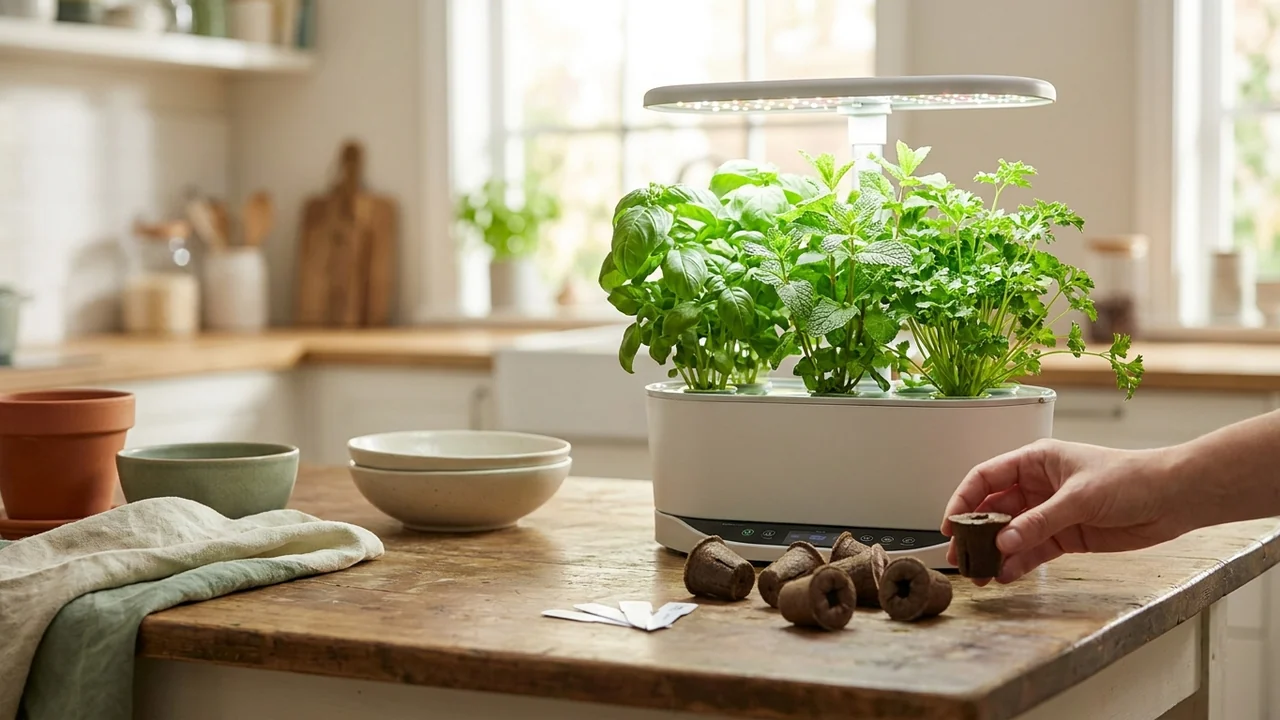
A smart garden is the rare piece of gardening gear that costs more after you buy it than when you buy it. The unit shows up, you plant the pods it came with, and eight weeks later you are standing in a web store deciding whether basil is worth another pod pack. That second decision, repeated, is the real price. Here is how to think about it before you commit, and when a plain grow light and a pot is the smarter buy.
Two costs, not one
Every smart garden has an upfront cost and a running cost, and beginners almost always compare only the first one.
| Cost | What it covers | How often you pay it |
|---|---|---|
| The unit | Base, light arm, pump or wick, controller | Once, lasts years |
| Seed pods | Seed, growing medium, nutrient tab | Every replant, forever |
| Nutrients | Sometimes bundled into pods, sometimes separate | Every few months |
| Electricity | LED plus a small pump | Continuous, modest |
| Replacement parts | Filters, wicks, the occasional light | Rarely |
Our scored pick in indoor smart gardens is the Click and Grow Smart Garden 3, a three-pod countertop unit. Three pods is a useful reference point precisely because it is small: whatever a pod costs, you are buying them three at a time.
Why we will not quote you a pod price
Branded pods typically run a few dollars each. We are deliberately not printing a precise figure, because pod pricing changes with promotions, plant type, and pack size, and a stale number in a blog post is worse than no number at all.
What is stable is the shape of the cost:
- Pods are sold in packs, usually three or nine, not singly.
- Herb pods and salad pods are usually cheaper than fruiting pods like chili or dwarf tomato.
- Subscription plans discount the pod but commit you to a delivery rhythm.
- Refillable pods have a small one-time cost, then you supply seed and medium.
Open the maker's pod store, price one three-pack, and multiply by how many times a year you honestly expect to replant. That number, not the unit price, tells you whether the machine makes sense.
Cost per harvest beats cost per pod
A pod is not a serving. A basil pod cut properly gives you weeks of leaves; a cilantro pod gives you a couple of good cuttings and then bolts. So the useful question is what a pod yields before you pull it.
| Plant type | Typical productive life | Cost behavior |
|---|---|---|
| Basil, mint, thyme | Long, if you cut above a leaf pair | Best value per pod |
| Parsley, chives | Long and forgiving | Good value |
| Cilantro, dill | Short, bolts readily | Poor value per pod |
| Leaf lettuce | Cut-and-come-again for a few rounds | Middling |
| Dwarf tomato, chili | Months, but needs the tallest light setting | Slow payback, high novelty |
Against grocery herbs, the comparison is only flattering if you buy fresh herbs regularly. If a plastic clamshell of basil goes soft in your fridge most weeks, a countertop unit that hands you six leaves at a time is a genuine saving. If you buy herbs twice a year, it is a hobby, and that is fine. Our guide to growing herbs indoors in winter covers which ones actually stay productive.
Refillable and generic pods
This is where the running cost gets cut, and where honest advice has to hedge.
- Several major makers sell an official grow-anything or refillable pod: an empty shell you fill with your own plug and seed. This is the safest way to lower cost because it is designed for your machine.
- Third-party generic pods exist for the most common ecosystems, and many people use them happily. Fit varies by model and by generation of the same model.
- Loose sponge or rockwool plus your own basket sometimes works, sometimes floats or wicks badly.
Buy one refill pack and run it for a full cycle before you buy in bulk. Compatibility claims on listings are not always specific about which generation of a unit they fit.
If you go refillable, you take on nutrients yourself, which means paying attention to the numbers on the bottle. Our explainer on NPK numbers is the short version, and hydroponic nutrients are dosed by volume of water, not by scoop.
When a grow light and a pot wins
A modest clip-on LED and a few pots of potting mix will grow the same herbs for less money. What you give up is automation.
| You want | Smart garden | Grow light and pots |
|---|---|---|
| Lowest total cost | No | Yes |
| Zero watering decisions | Yes | No |
| Grow whatever seed you like | Only with refills | Yes |
| Fits a small kitchen counter | Yes | Depends on the fixture |
| Doubles as seed starting in spring | Barely, few slots | Yes, easily |
| Looks tidy in a living space | Yes | Rarely |
The seed-starting line matters more than people expect. A shelf light you already own earns its keep every spring, and the main skill it demands is holding the right gap between bulb and seedling, which we cover in grow light distance for seedlings. Getting that wrong is one of the classic seed starting mistakes.
A simple decision rule
- You cook with fresh herbs weekly and hate fussing: buy the smart garden, plan on refill pods.
- You want to start tomatoes and peppers in spring: buy the light and trays instead.
- You are not sure yet: take the gear quiz, it sorts this in about a minute.
Where this fits on the Primer Path
Indoor growing sits in Four-Season Gardening, the level where you stop taking winter off and keep something alive under lights while the beds sleep. Treat a smart garden as the low-friction on-ramp to that level rather than the destination. Once you are comfortable, the same instincts scale to trays, a shelf light, and a spring sowing schedule you can map with the planting calendar. If you are earlier than that, start at the beginning of the Primer Path and come back when the counter is free.
Common questions
How much do smart garden pods cost?+
Branded seed pods typically run a few dollars each, and they are usually sold in three-packs or nine-packs rather than singly. Prices move with promotions and with the plant, so check the maker's current pod store rather than trusting a number in an article.
Can I refill smart garden pods myself?+
Often yes. Several makers sell an official refillable or grow-anything pod you fill with your own sponge or plug and seed. Third-party refills exist too, but compatibility varies by model and generation, so match the part to your exact unit before buying a bulk pack.
Is a smart garden cheaper than buying grocery herbs?+
It can be, if you actually harvest steadily for months rather than letting one basil bolt and quitting. The math works on repeat cutting, not on a single crop. Herbs you buy weekly in small clamshells pay back fastest; lettuce rarely does.
Do smart gardens use much electricity?+
A small countertop LED running a long daily photoperiod is a modest draw, similar to other small always-on household lights. It is real but it is rarely the line item that decides anything. Pod refills and your own attention matter far more to the total.